

[image]
[title]The week before my Romanian hiking holiday came around, my five-year relationship ended. I’d not long endured the emotional and physical toil of untangling our lives, moving out of our shared flat and, temporarily, back in with my parents. At the time, embarking on an organised walking trip with a group of strangers wasn’t high on the list of things I felt like doing.
But then I considered that, actually, maybe that is exactly what I should be doing. I remembered that there are people who, when faced with epochal, life-altering events, walk – sometimes for months, even years, often 15 or 20 miles a day. What I had in front of me was a five-day trip, of which only three would be spent walking; maybe seven miles a day, at a push.
So, I flew to Romania. In the baggage claim of Cluj-Napoca Airport, I located a huddle of friendly women, the group with whom I’d spend the next few days hiking the northern reaches of the Via Transilvanica, Romania’s very own long-distance pilgrimage; the little-known ‘Camino of the East’.
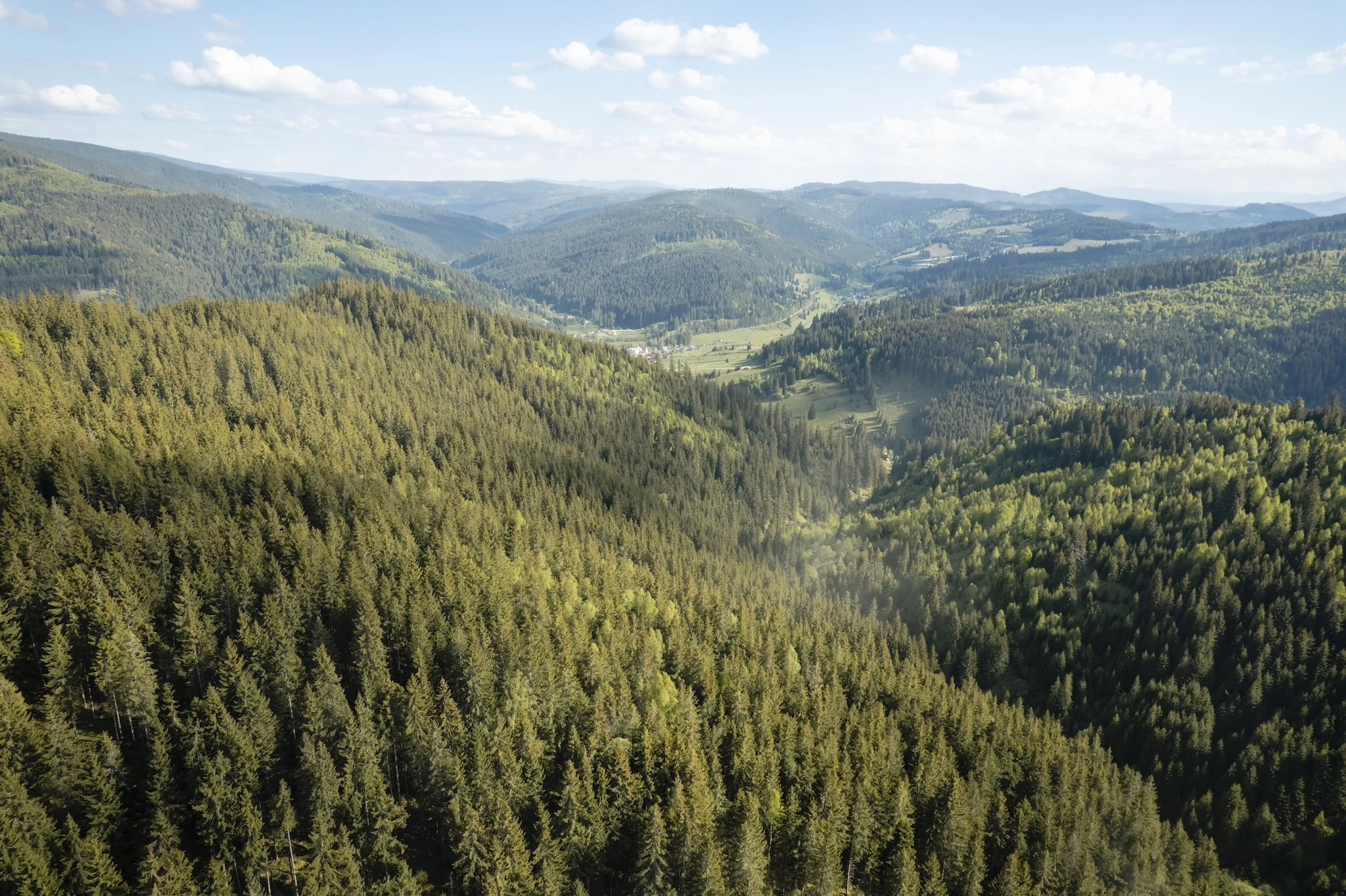
This 1,400km trail weaves its way diagonally across the country, from the northeastern region of Bucovina through the heart of Transylvania, culminating in the southwestern city of Drobeta-Turnu Severin. Hikers pass through some 400 communities along the way, traversing landscapes including dense spruce forests, mountain gorges and alpine meadows, stopping at local guesthouses for cheap homemade feasts, a place to rest and a stamp on their pilgrim’s passport. It takes roughly two months to hike in full – this trip, part of a newly-launched tour with Intrepid Travel, is a tiny taste of the expedition.
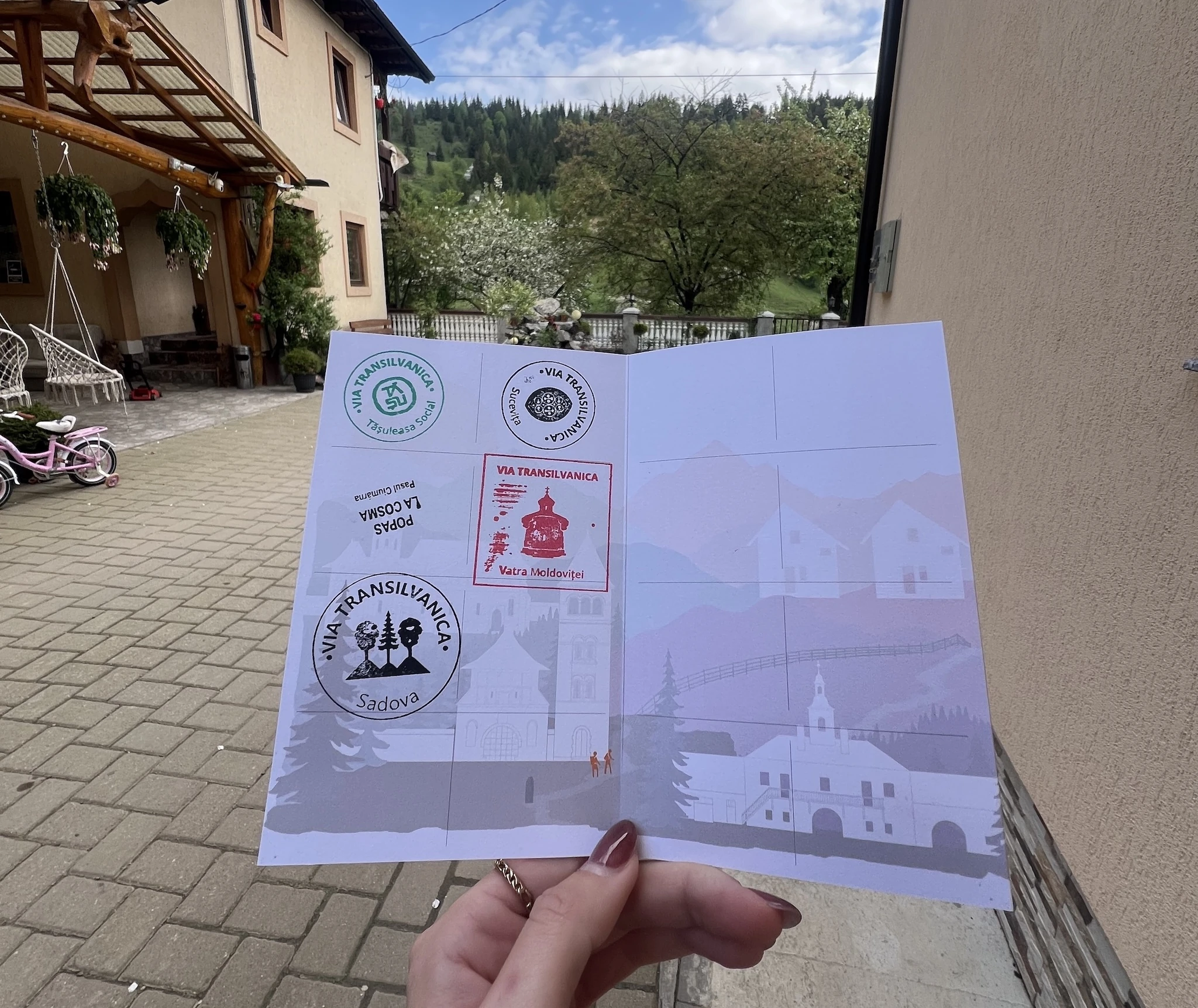
‘People on the team did the Camino de Santiago and thought, we can do that here,’ Iulian Gabor, one of the Via Transilvanica’s founders, tells us as we amble through the grounds of the Tășuleasa Social basecamp. ‘We have everything the world’s most famous pilgrimage route has – the nature, the local homestays, the landscapes.’
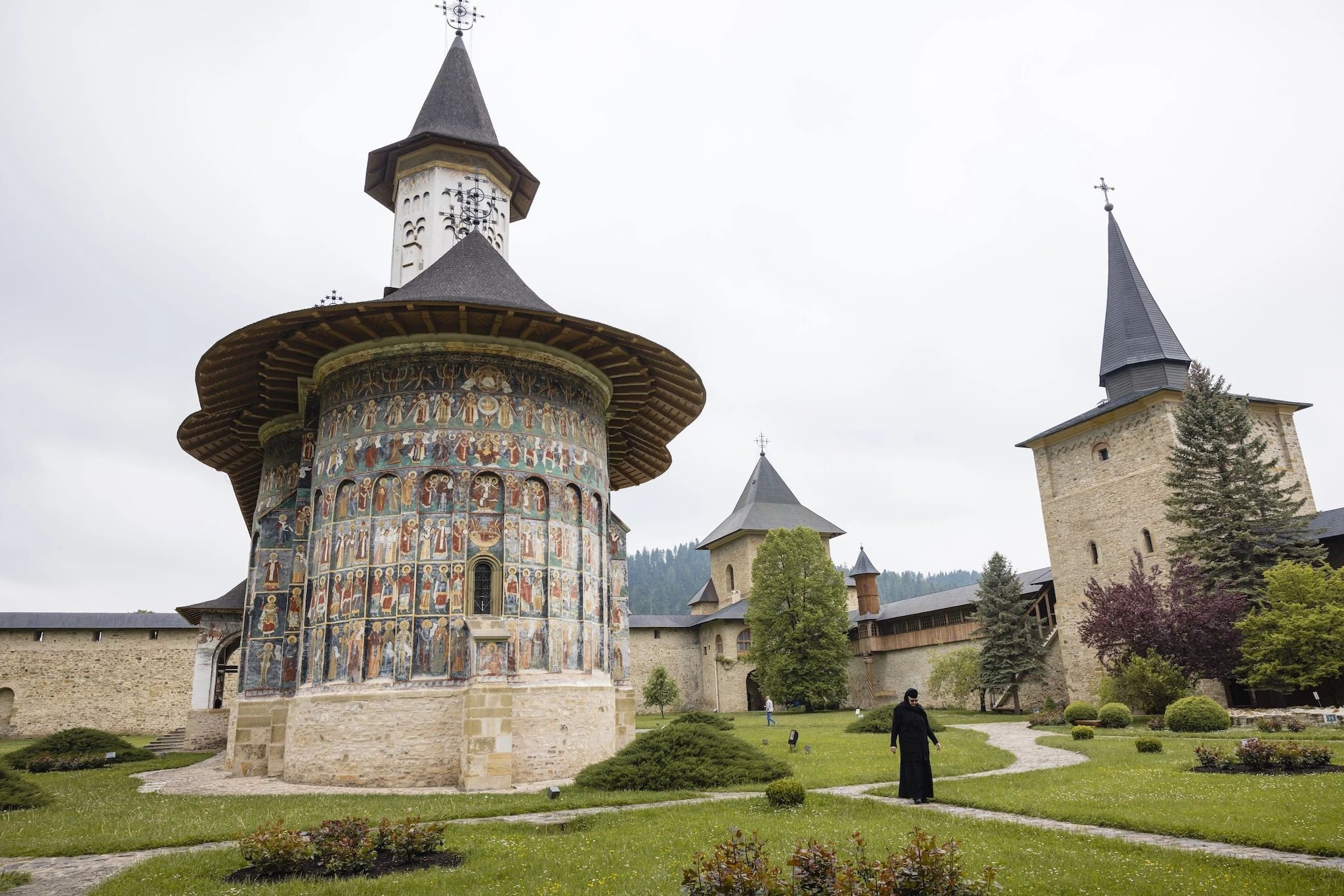
So they did. Over four years, the team connected existing countryside paths, installing individually sculpted waymarkers and enlisting local hosts to welcome walkers along the way. What was once a popular route for religious tourism – Bucovina, the trail’s starting point, is home to eight incredibly elaborate, UNESCO-listed Painted Monasteries – the Via Transilvanica has since expanded into a mega-trail for active holidays and cultural tourism.
At the basecamp – a cool, chalet-style campus in the Bucovina hills – we get a glimpse of the ambition and heart behind the trail. On one side of the grounds stands a prototype of a new style of accommodation to be built along the route: a nifty wooden hut with a working toilet, a bed, and even an upstairs area. While most trekkers stay in guesthouses (and, in some cases, sleep on straw in shepherd’s barns), the team at Tǎșuleasa aims to install 100 of these wooden huts along the trail, each to be taken care of by a member of the local community (those who maintain their section of the trail are affectionately dubbed ‘road parents’).
The Via Transilvanica is, technically, the largest open-air sculpture park in the world
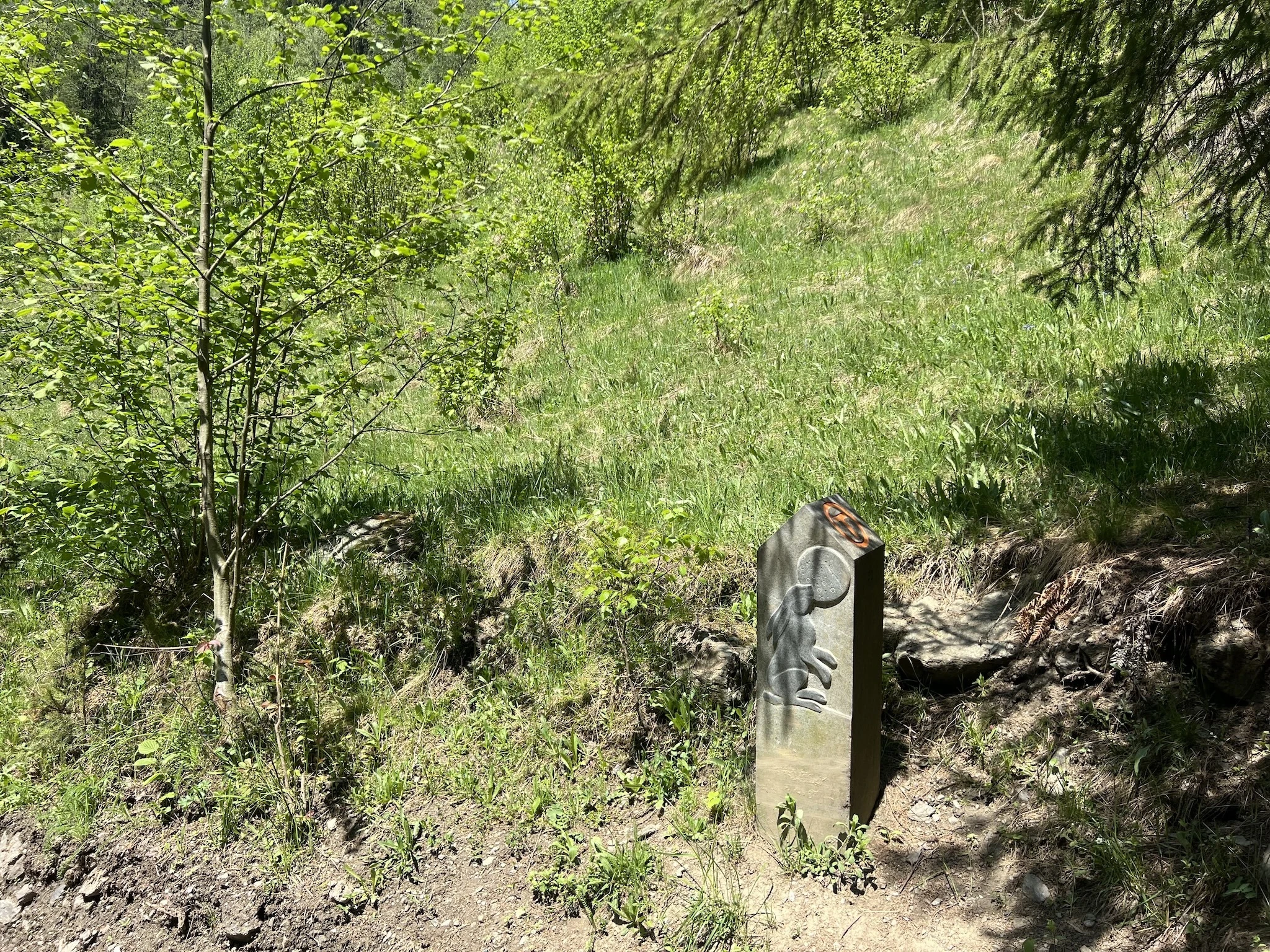
On the other side of the campus sits a huge stack of freshly carved waymakers, ready to be planted at kilometre intervals along the ever-expanding route: 170km of new paths have opened in 2026, part of a wider 20-year plan that will see the trail extend into the far reaches of the country. Every stone post bears a unique carving: there are animals and religious symbols, faces and body parts, including feet and, to my delight, a bare bum.
‘Local and international artists sponsor the posts, paying to carve whatever they like,’ Iulian says. ‘The Via Transilvanica is, technically, the largest open-air sculpture park in the world’.
Iulian and co attest that the Via Transilvanica is built for the average person, and that you don’t need to be an experienced hiker. But it is more difficult, in a way, than the Camino de Santiago it’s modelled after. Landscape and terrain aside, there’s far less accommodation and hiking-ready infrastructure. And there are, of course, far fewer people walking the route. Over our three days walking the trail, which takes us along the mountain passes of Suceava county in the Via Transilvanica’s northernmost stages, I could count the fellow trekkers we encountered on one hand.
On our second day, a lone American hiker brings some welcome respite to a tough downhill walk. Half an hour earlier, I’d been savouring what I’ve no doubt will cement itself as the most memorable coffee break I’ll have in my life. We’d climbed from the town of Sadova to the top of the Bucovina ridges, a subrange of the Eastern Carpathians, taking on mountain trails through alpine meadows and herds of mountain cattle, before stopping to gather around Iulian’s portable coffee maker and gratefully pass around two espresso cups. The scenery surrounding us on all sides was staggering: nothing but dense alpine hills and sloping green valleys.
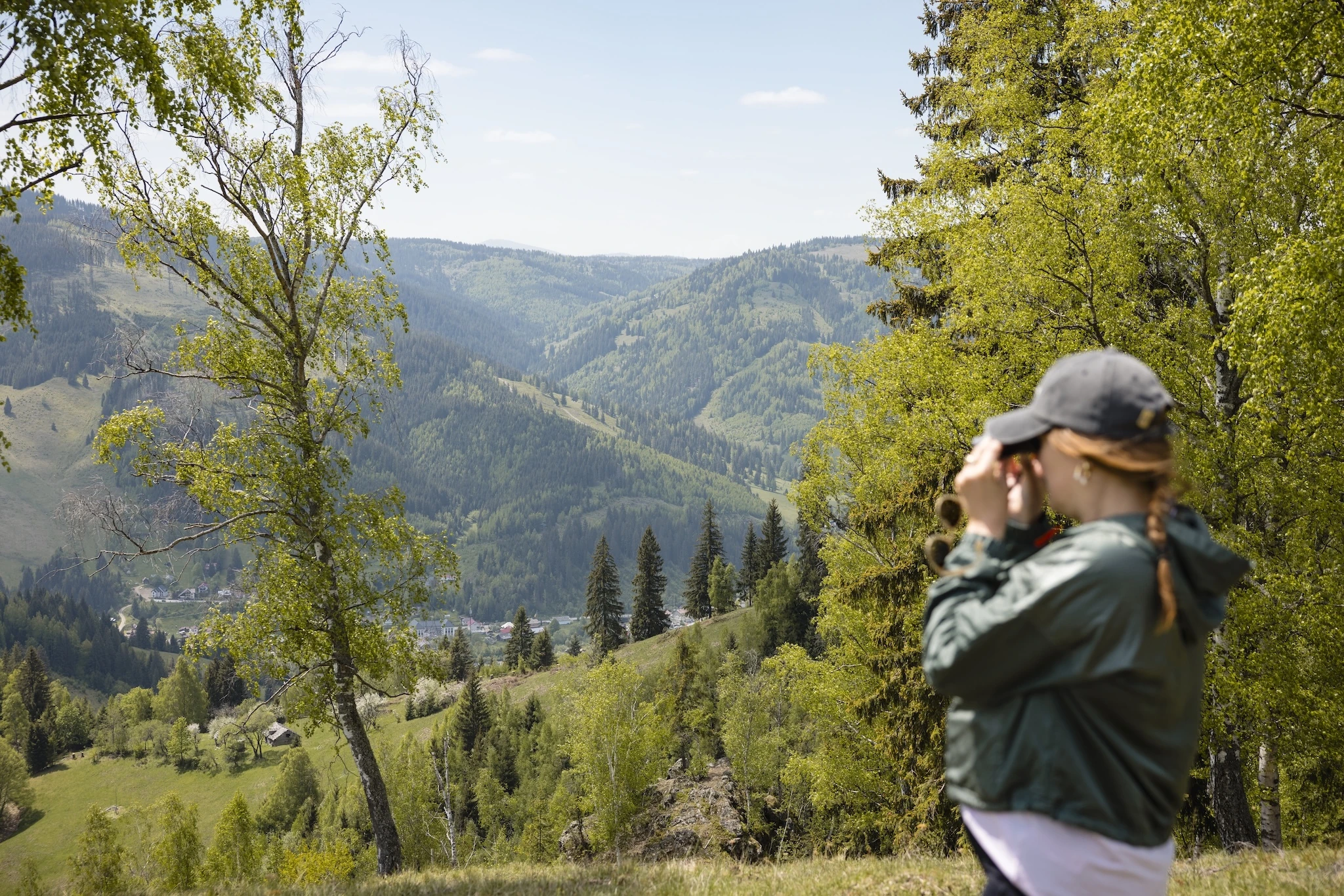
The descent, which takes us downstream toward the colourful little town of Fundu Moldovei, turns out to be much more taxing than the climb. I’m afraid my thighs are close to buckling when we spot her – the lone American hiker – walking sticks in hand, heading upstream, in the opposite direction. As she approaches, our group of six or so comes to a standstill to chat about our respective journeys. She tells us, excitedly, that she’d seen a bear that morning.
‘I saw your post on Facebook!’ says Raluca, our companionable Intrepid guide who hails from the region. (Romania’s Carpathian Mountains are home to Europe’s largest population of brown bears – and wolves, and lynx – outside of Russia, though the wildlife we’ve encountered so far has been largely pastoral: horses, cows and sheep).
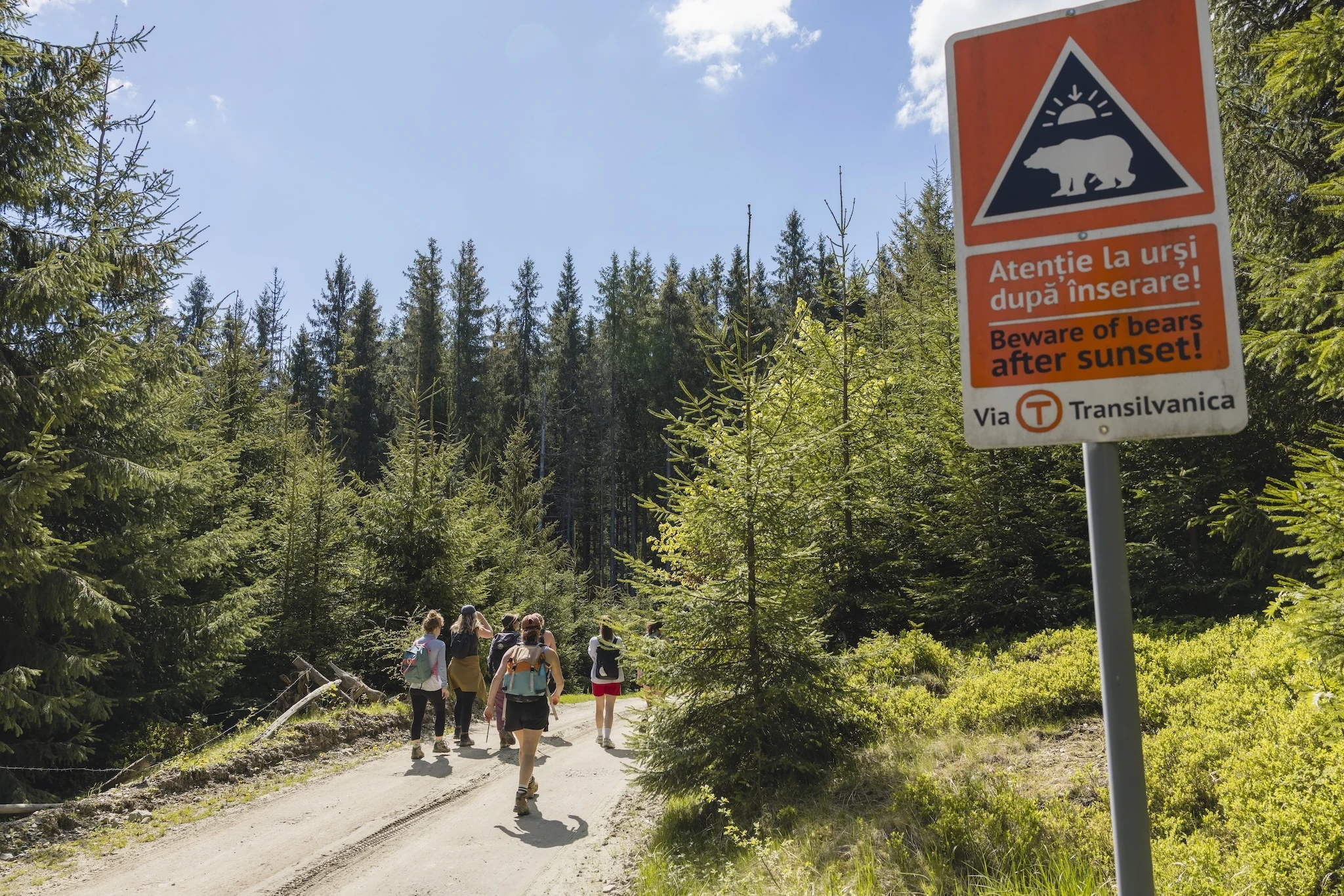
At the time of writing, Via Transilvanica’s Facebook group has 176,000 members, who take to the page to recommend routes, map their trip and find friends. There are now plenty of international trekkers taking on the trail – we meet a British mother-and-daughter the following day – though the original idea was more homegrown. The team wanted to encourage locals to stay in the country and make the most of Romania’s incredible landscapes, and, in turn, bring tourism and life to rural villages, giving even the most isolated communities the opportunity to host and feed hikers for a fee.
Take Popas La Cosma. We reach this humble roadside pitstop after a cold, foggy walk, the call of tumbling cowbells guiding us through a misty forest and into the hospitable embrace of Cosma and Constantin Crăciuneac. This father-and-son duo have developed what was once just a water tap and a bench into a homely rest stop for hikers, complete with a bed for the night for those who need it. Here, huddled together around an outdoor table, we tuck into a hearty lunch of cured meats, hard-boiled eggs, lard, sausages and cow cheese, followed by jam doughnuts and crepes stuffed with sweet cream cheese and blueberries.
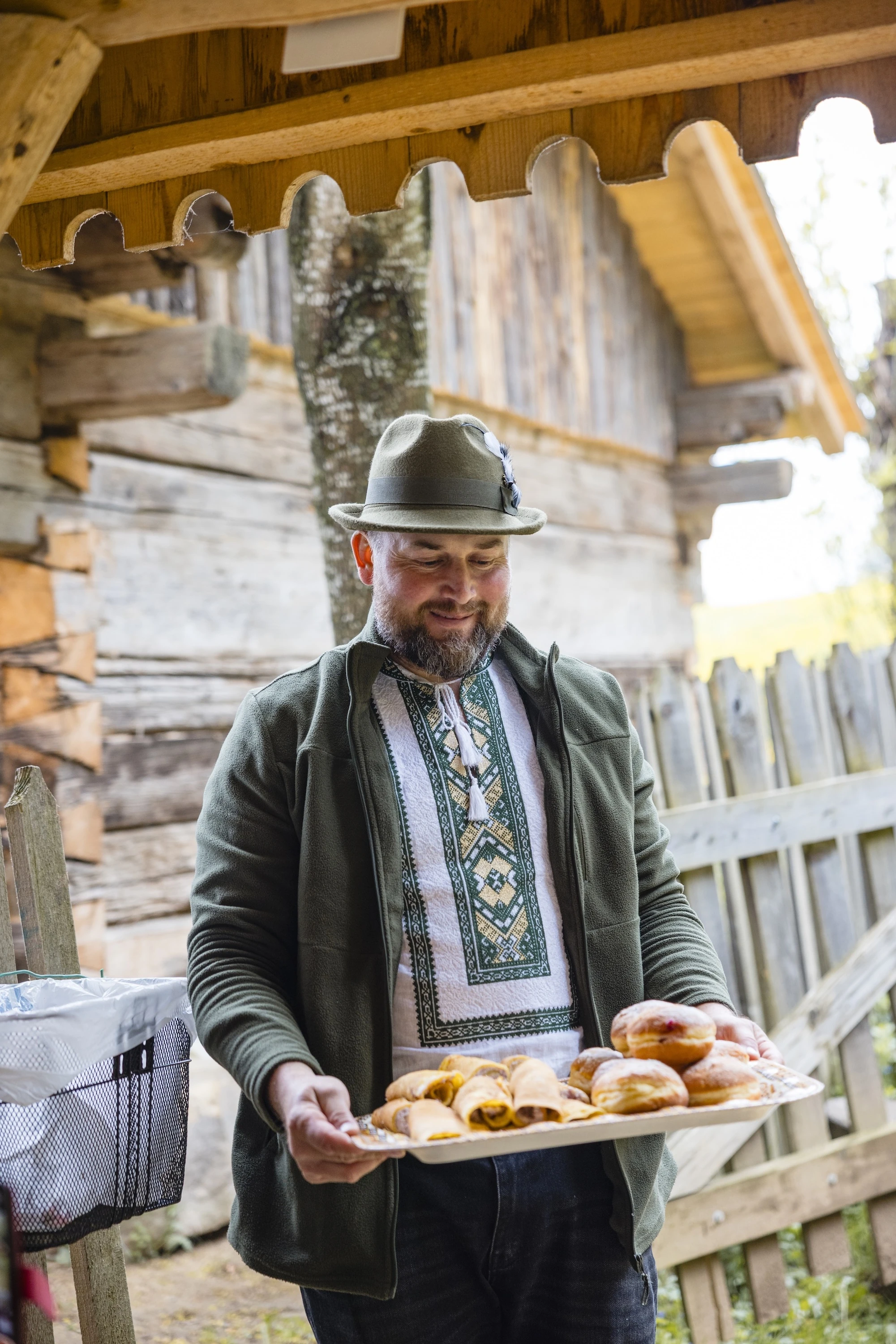
In the heart of rural northern Romania, despite the language barrier, we bond with Constantin and his father over magic tricks and videos of their kids. After lunch, we watch Constantin’s mother stirring cow’s milk over a wood fire to make caș, a soft Romanian cheese. We get a tour of their barn and stroll across the flower-studded meadow, watching the fog clear over the hills. Then we wave goodbye and carry on.
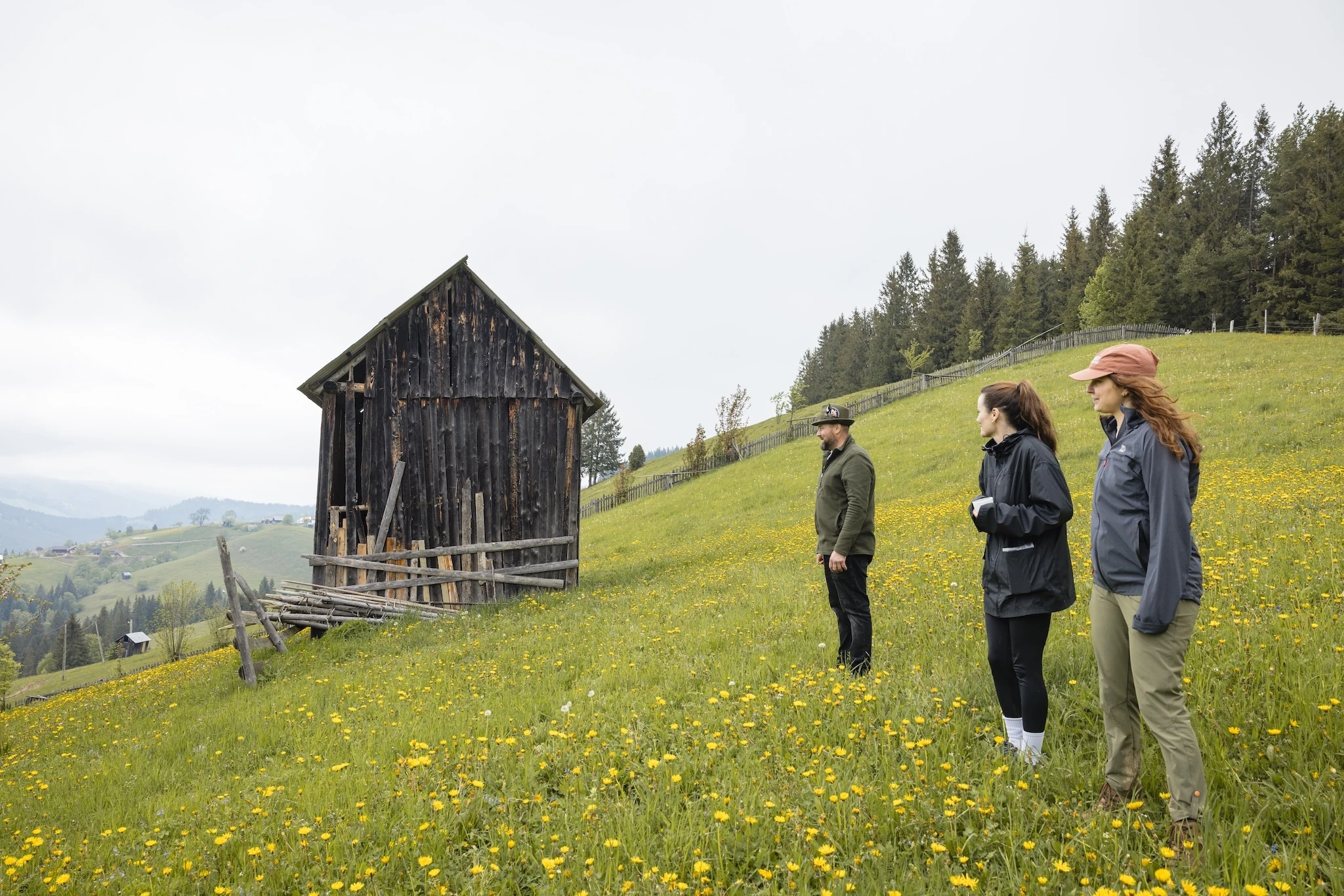
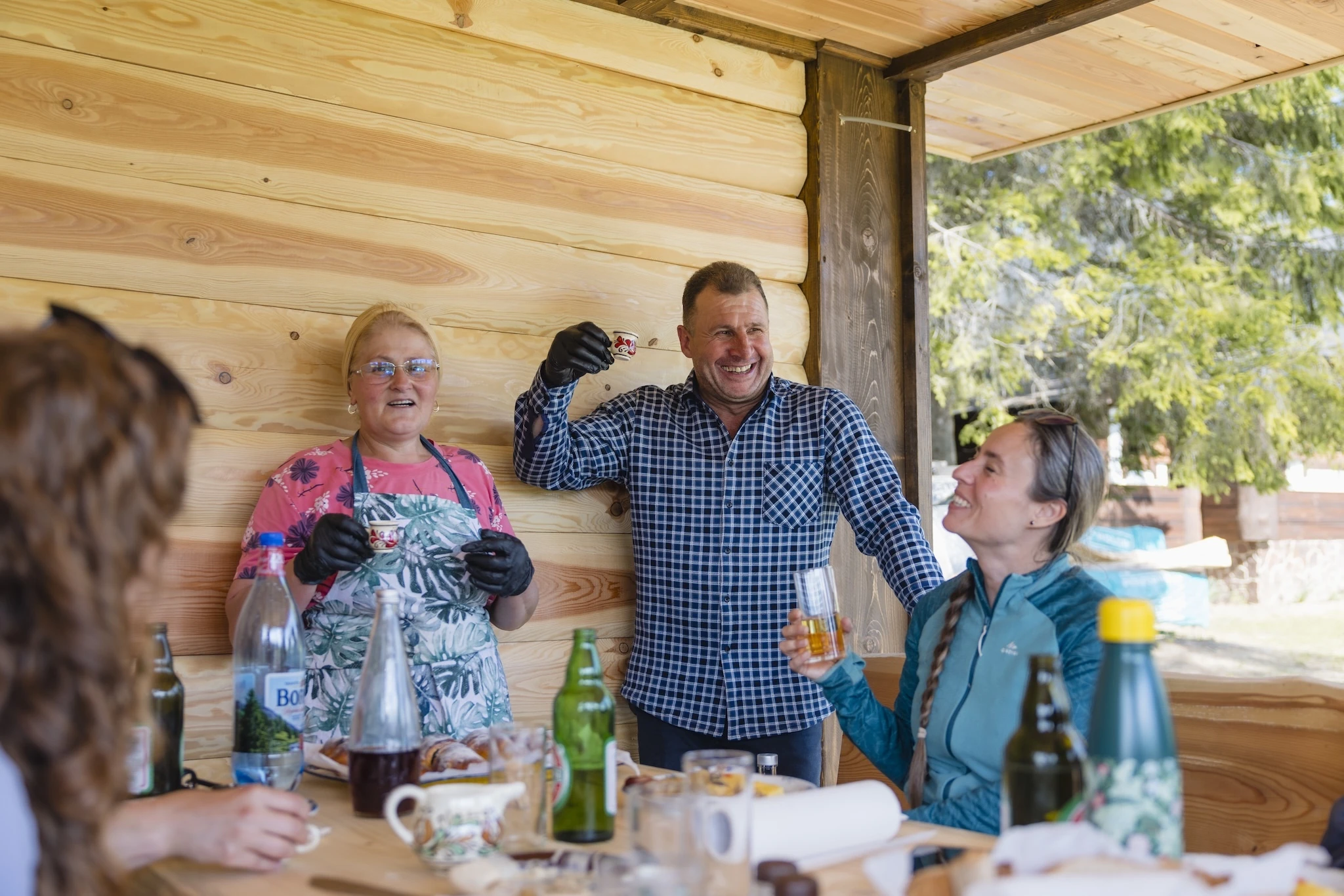
Our three-day hike is punctuated by these intriguing, wholesome moments of Romanian hospitality and tradition. We are beamingly welcomed by every host along the way. At Cabana Gigi Ursu, we befriend newborn puppies over a lunch of cheese and chilli jam, chicken noodle soup with chilli peppers, bottles of local pilsner and shots of sour cherry liqueur, all surrounded by endless views of spruce-covered hills. We receive the same greeting from the husband-and-wife duo at La Moara Bucovina, where we tuck into cabbage rolls, more chicken noodle soup and more dense, sugary bread – all washed down, of course, with even more shots of cherry liqueur.
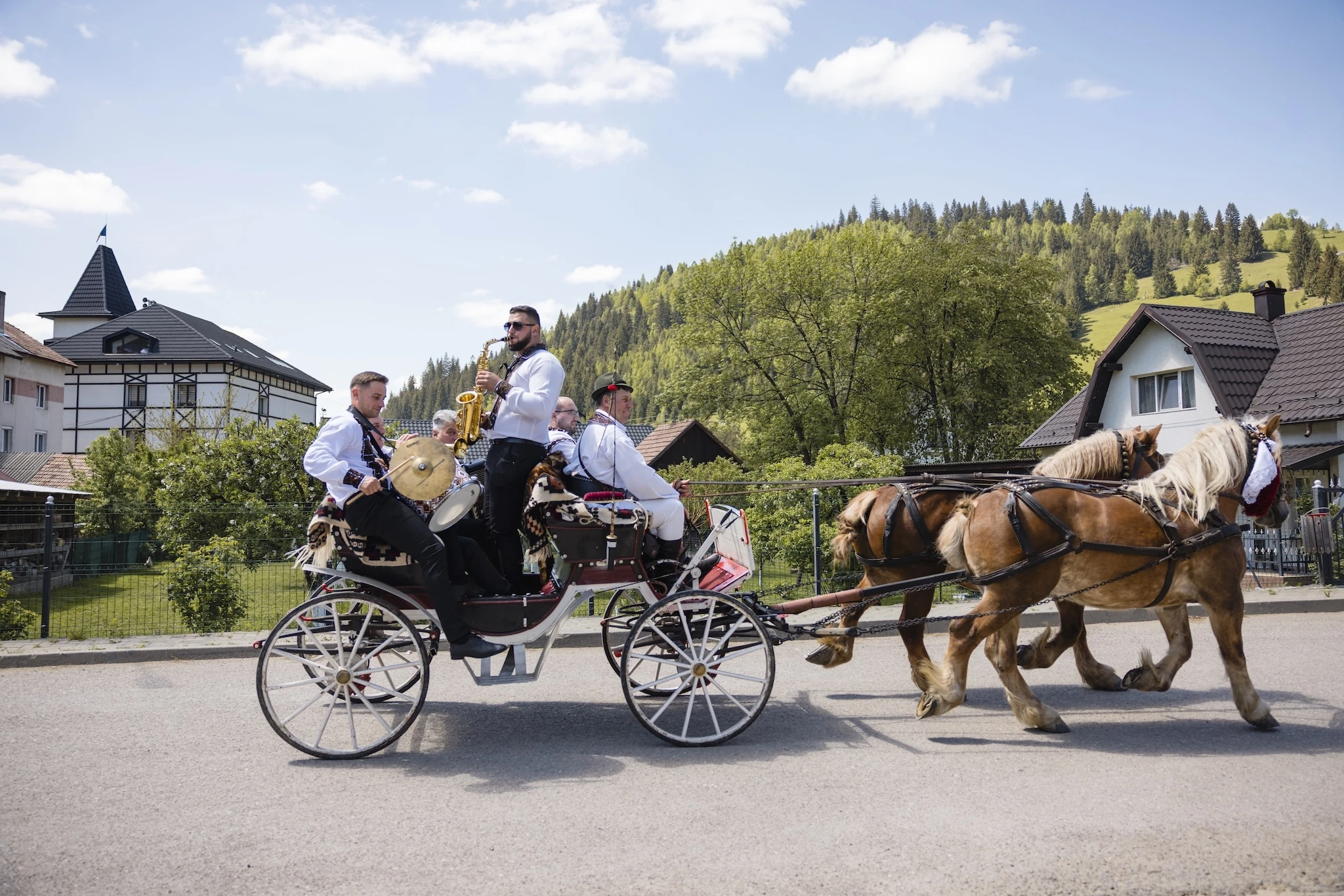
In Fundu Moldovei, as we’re gathered around a table in the sun at a local bar, a procession of horse-drawn carriages goes by in a clamour of noise and excitement: a traditional folk wedding escort, accompanied by high-pitched yelling, jingling horse bells, percussionists and the brassy wail of the saxophone.
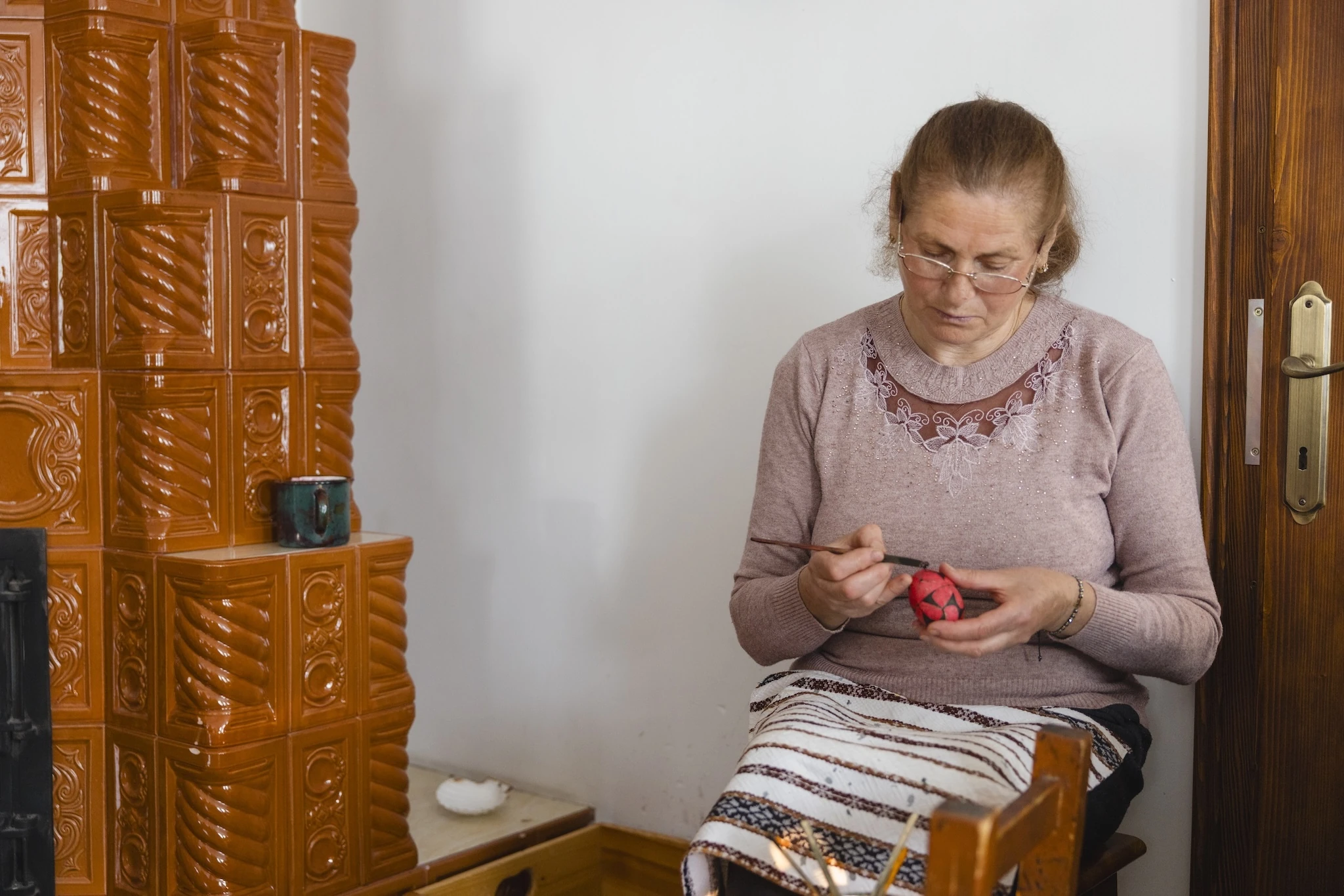
In Moldovița, we meet local craftswoman Viorica Semeniuc, one of Romania’s few expert egg decorators. Surrounded by glass cabinets containing hundreds of intricately painted eggs, we watch her undertake the delicate process of dipping, dyeing and hand-painting patterns onto eggshells. To our delight, we’re each gifted one at dinner that evening.
People who have walked the Camino de Santiago, Europe’s famous 500-mile pilgrimage through France, Spain and Portugal, talk about the profundity of their experience; the combined effect of daily meditative walking, spending long stretches of time outdoors, immersion in local culture and bonding with others undertaking the same journey – for whatever reason.
I might have only completed three days of this two-month pilgrimage, but I came away understanding the transformative effects and therapeutic value of a good, long walk. Strolling through spruce forests and breathing the kind of crisp air that clears the cobwebs from your mind and the pollution from your lungs, the sun winking through gaps in gangly trees. Every unflinchingly gracious host we met along the way, ecstatic to welcome and feed us. And, of course, the invaluable time spent with the women who walked beside me. On pleasant six-mile treks, whoever you ended up keeping pace with, you chatted to. Invariably, as we ambled through rolling highland meadows, clambered up steep wooded valleys, and stopped to mark another kilometre post, talk turned to our lives – relationships, illnesses and everything in between. It was exactly the balm I needed. I am now glad, very glad, that I chose to walk.
Grace Beard was a guest of Intrepid Travel. Intrepid Travel’s 10-day Hiking in Romania: Via Transilvanica Trail, from £1,616pp, includes accommodation, ground transport, services of a local leader, guided hikes and some meals and other activities.