[category]
[title]
Do a wine tasting in the cellar and then climb to the parapet—or into the torture chamber.


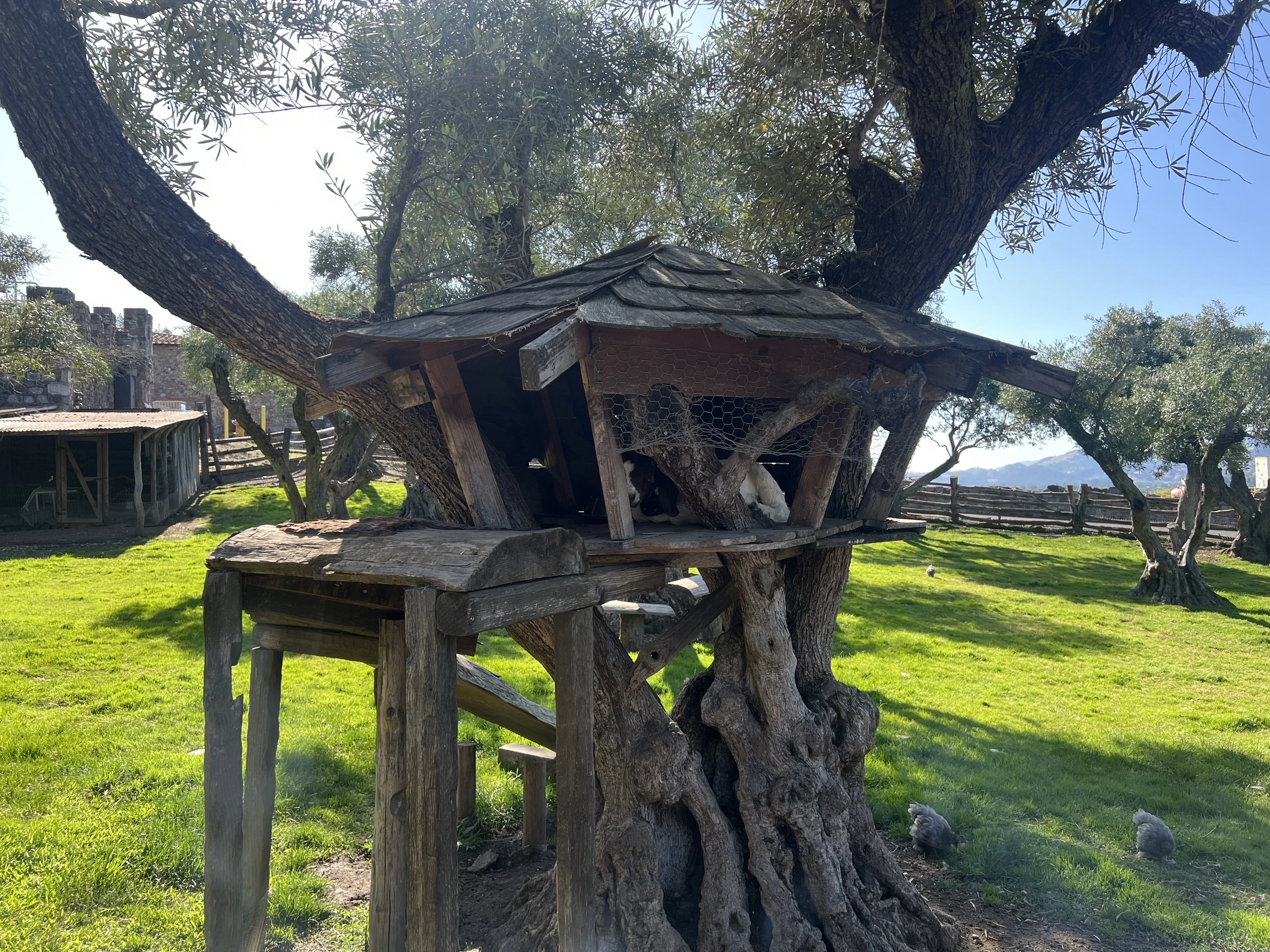
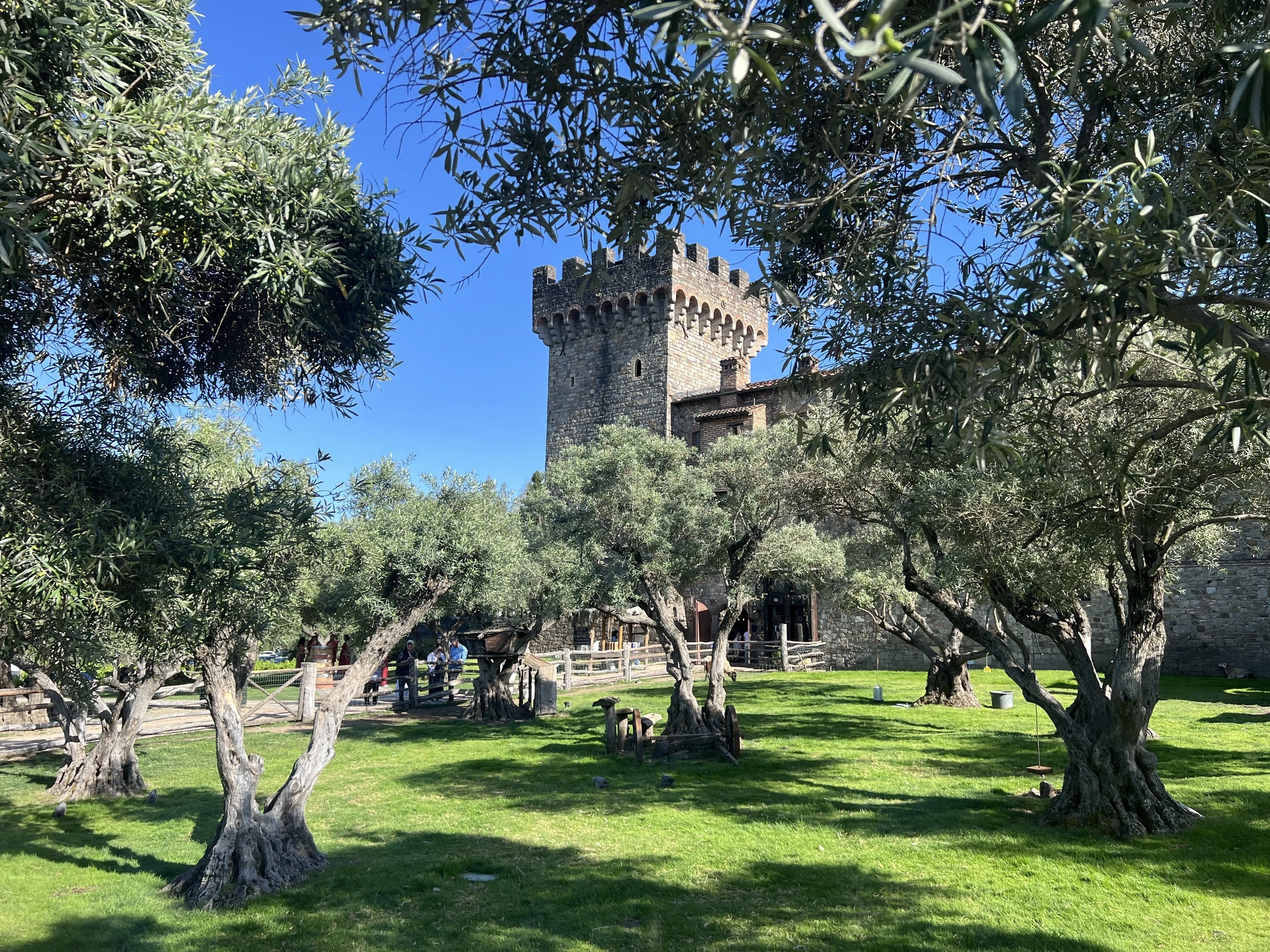
A castle is a beautiful thing, and a winery is a beautiful thing, and if you can get both in one—like at Napa Valley’s Castello di Amorosa—you’re living large. But this is no ordinary California winery: You’ll encounter a goat perched in a treehouse, chickens roaming the grass and emus in their own pen.
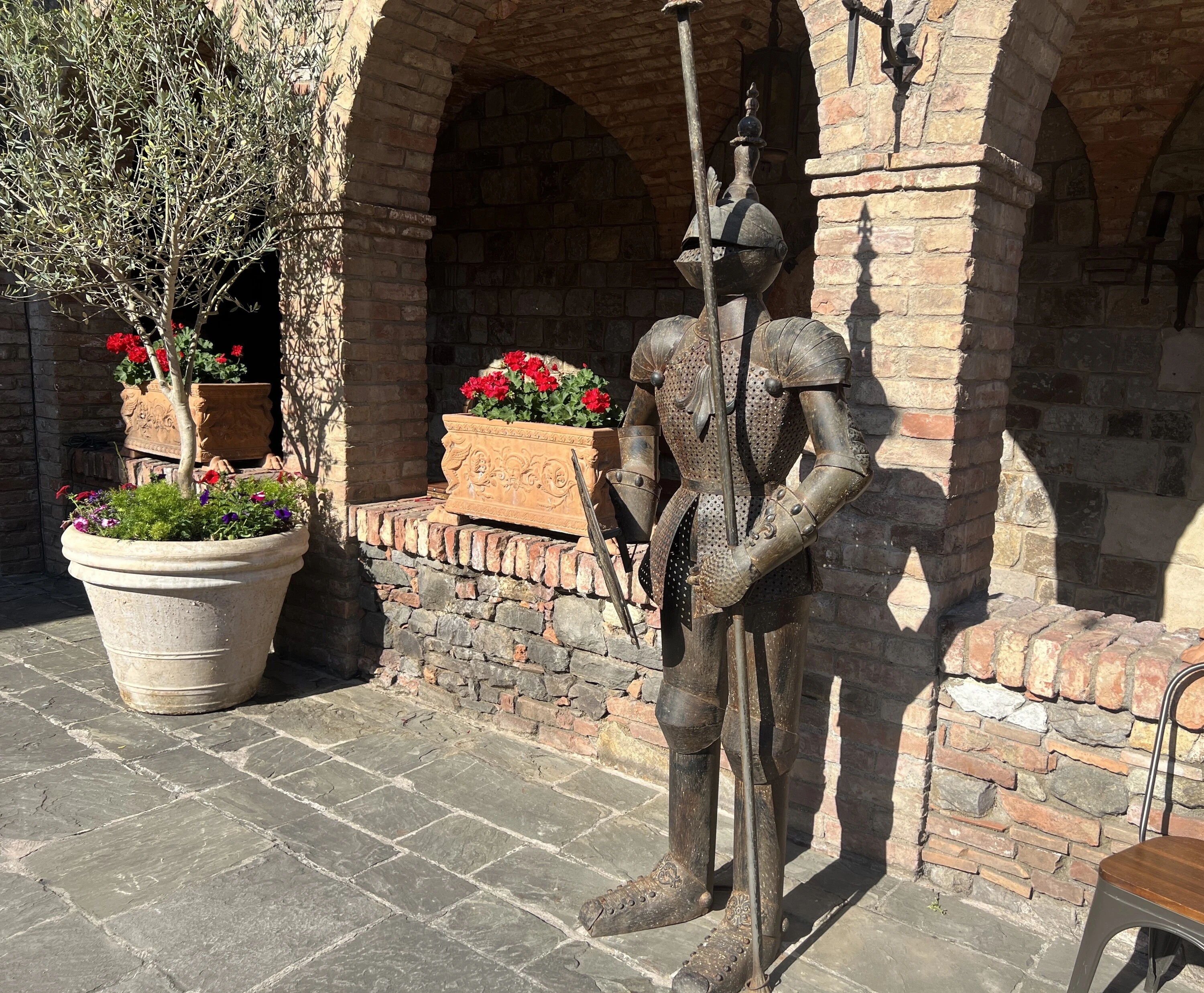
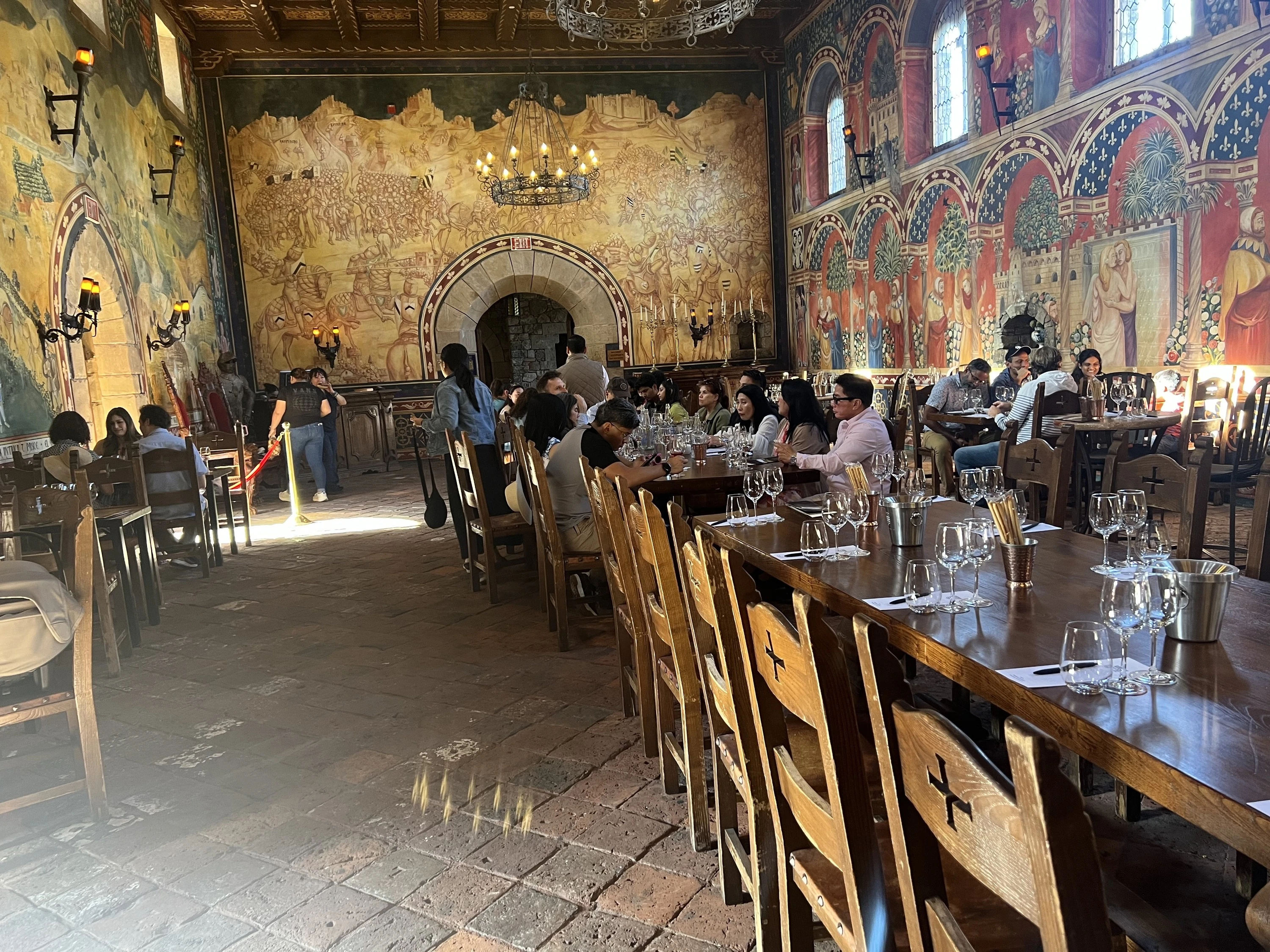
Inside, after walking across the drawbridge, you’ll find a gloriously muraled great room, suits of armor, a chapel, arches and battlements, towers and even a torture chamber. Of course, the best part is the tasting room, where you can sample a full slate of Italian wines.
You may feel like nobility at Castello di Amorosa, a contemporary estate that convincingly looks like a 700-year-old palace, but you’ll still need to book in advance to be able to enter the castle gates here. I did just that and went last month with one of my teenage daughters, and chose the seated reserve tasting with five tastes for $60, while she had a selection of grape juices for $25. (Adults can also choose a “Libero” tasting of non-alcoholic wines.) The seated reserve tasting gives you access to roam the castle and grounds and sit down in the large cellar space for the tasting; you choose off a menu and your server comes around five times to chat and pour.
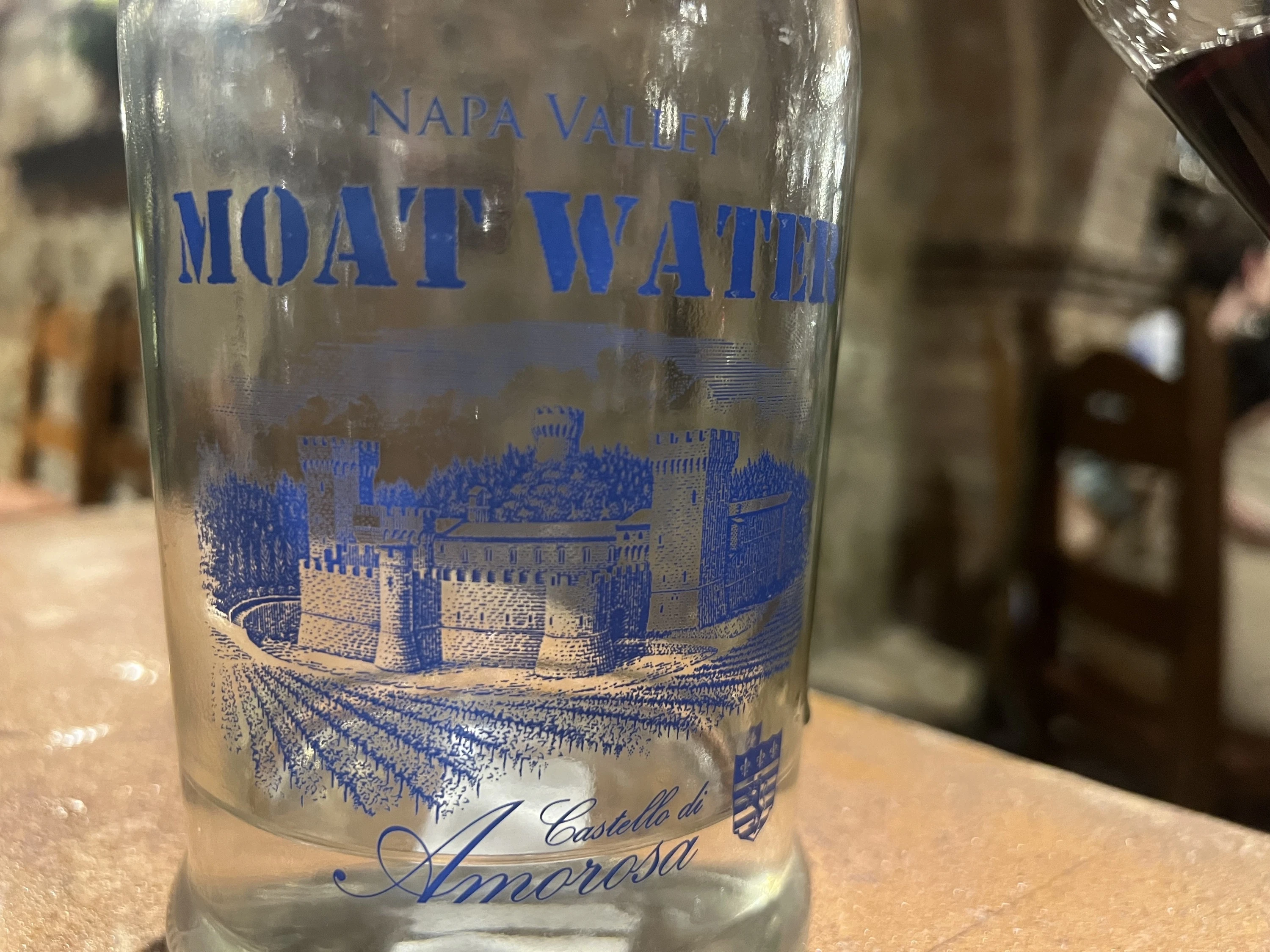
We had a fun server and loved the various castle-themed pouring spouts, like one that looks like the helmet of a suit of armor and one that’s shaped like a dragon. Included were crisp Italian breadsticks—which we devoured. We also shared a little box of La Belge chocolates made locally in Napa Valley and a carafe of water amusingly labeled as “Moat Water.”
In the fluster of a fantastic day, I lost track of my tasting chart, but I remember having a brut rosé, a Zingaro old vine zinfandel, a pinot noir and… gosh, two others. They were all delicious and felt very in keeping with the atmosphere. I took tastes of my daughter’s selections as well, and they were much more sophisticated than just a glass of grape juice: She was poured a gewürztraminer grape juice, a muscat canelli grape juice and a “red blend”—almost like preparing today’s juice drinkers to be the wine drinkers of tomorrow.
This particular tasting does not include the underground dungeon, armory or torture chamber; that mostly comes with 21+ experiences which are a little more expensive, but if your child is dying to go, you can book a private guided tour.
The large underground tasting room is connected to a nicely curated gift shop, which has a bit of a secret: If you stand in a certain part of the room, and your guest stands in another certain part, you can whisper to each other and be heard thanks to the seemingly magical acoustics of the sloped, vaulted ceiling.
Alas, this American castle does not have any history of a lord or lady behind it, but it was built by “wine royalty” nonetheless. Its creator was fourth generation winemaker Dario Sattui, who is behind my longtime favorite St. Helena winery, V. Sattui. His great-grandfather Vittorio Sattui (the “V”) came to Napa from Italy to found Saint Helena Wine Cellars in 1885. The winery closed during Prohibition and didn’t reopen, although the family continued to live there. In the 1970s, the globe-trotting Dario (living out of a VW van, living the dream) decided to revive the long-dormant business and opened V. Sattui in 1975. If you haven’t been there, it offers expansive picnic grounds and plenty of things in the mercato to fill your picnic basket: house-cured salami from the salumeria, 250 cheeses from around the globe kept fresh in a 26-foot refrigerated cheese wall (that’s about 10 different cheeses per foot, which is just incredible), and of course, incredible wines. V. Sattui is also a stop on the Napa Valley Wine Train.
But Dario also wanted to build a castle just like the ones he had seen and sketched in Europe. His concept was a historically accurate 14th-century Tuscan-style castle on good acreage where he could grow Italian-style wines to be served or sold only at the castle. Construction began in 1994, and the castle opened in 2007. That may seem like a long time, but Dario used only hand-chiseled local stone and imported antique bricks from Europe, insisting on “employing the same methods and materials that would have been used 700 to 800 years ago,” according to the castle’s website. (Interestingly, France’s Guédelon Castle began construction in 1997, around the time that Dario started, and is still underway. The workers on this archaeology project use only 13th-century methods for construction.)
Today as you wander through Castello di Amorosa, a posted sign warns you that, “Our paths and stairways are made of hand-carved stone, hand-hewn wood and centuries-old European bricks, to stay true to the building techniques used in the Middle Ages.” However, one benefit this castle may have over its medieval European counterparts is that it’s fully ADA compliant. Elevators can whisk you from floor to floor.
If you have a good imagination, you can feel transported back in time, especially since the day we were there the castle wasn’t busy and we were able to sometimes be in very medieval-feeling spaces alone. It is a definite thrill to look out an arched stone window at the vineyards below and contemplate someone else looking out the same window… circa 1994. Ah well, it’s all good fun! And it’s just an hour and a half drive from San Francisco.
Discover Time Out original video