[category]
[title]
Pikes Peak’s century-old donuts can only be made at high altitude, so I took Colorado’s famous cog railway to try one for myself.


There are countless ways to buy a donut. You could walk to a bakery. You could hit a drive-through. You could buy a box at the grocery store and be home before your coffee gets cold.
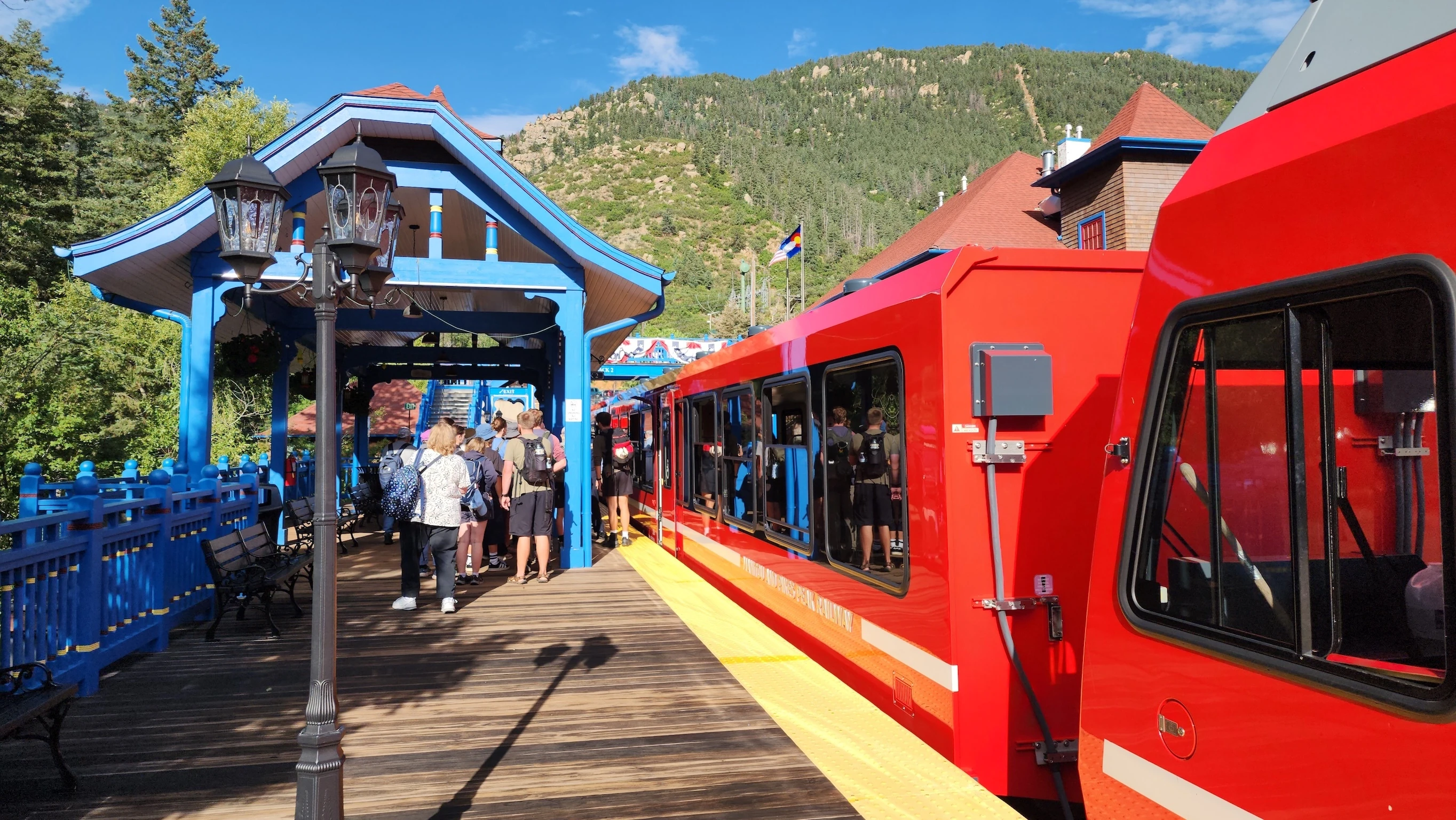
Or you could board a train in Manitou Springs, Colorado, and ride more than 14,000 feet up a mountain.
On a recent trip with my brother, we chose the latter.
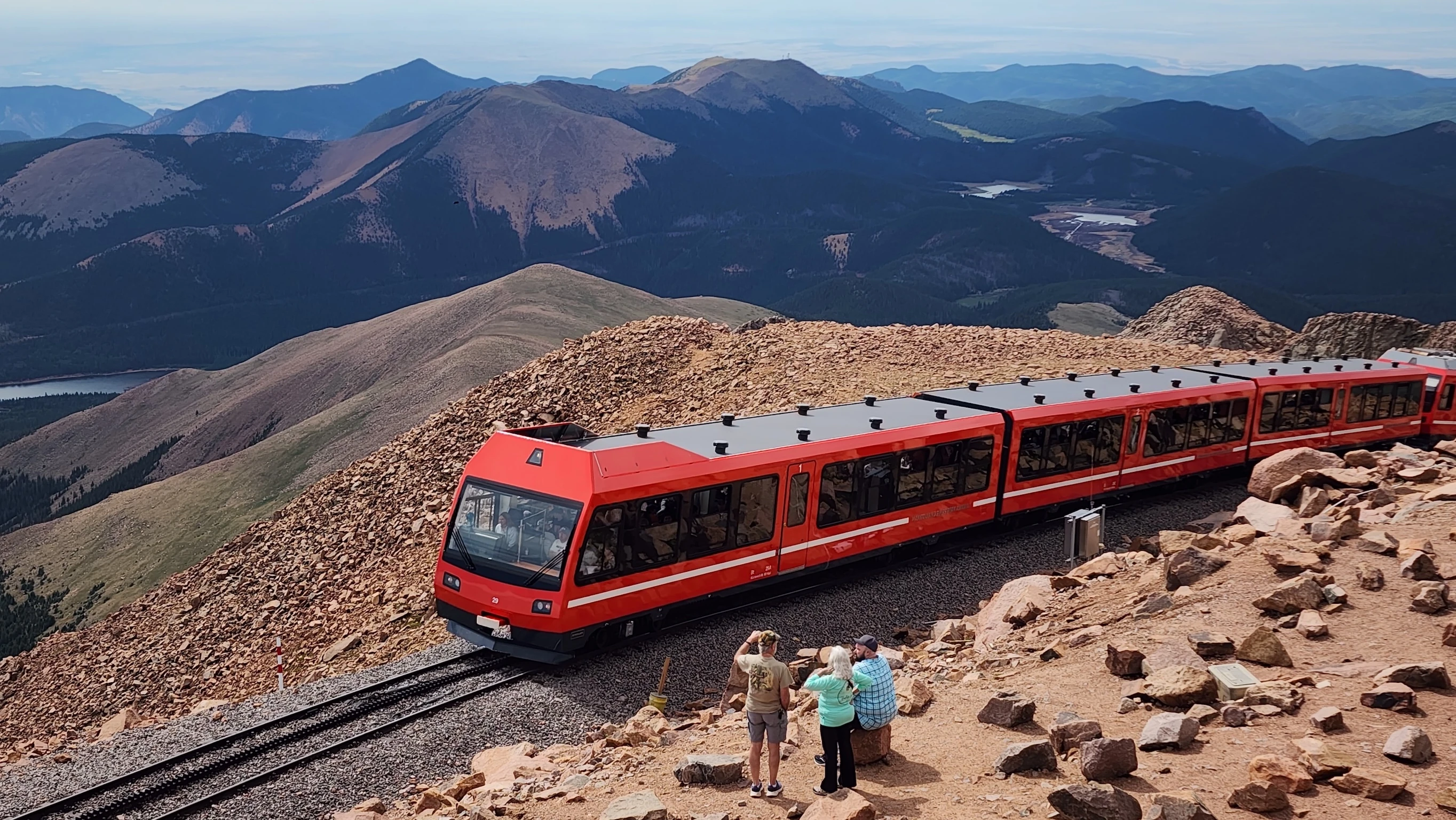
The Broadmoor Manitou and Pikes Peak Cog Railway has been carrying passengers to the summit of Pikes Peak since 1891. The trip takes a little over an hour each way, traveling from the forest outside Manitou Springs through increasingly rugged terrain to the top of one of Colorado's most famous mountains.
The scenery would have been enough reason to go. But we had an ulterior motive. We’d heard about the donuts at the summit for years, and we weren’t raised to pass up a chance to indulge in a fresh pastry.
The Broadmoor Manitou and Pikes Peak Cog Railway isn't a normal train. Pikes Peak is far too steep for a conventional railroad, so the railway uses a cog system. A toothed wheel underneath the train engages a rail between the tracks, letting it climb grades that would be impossible for a regular train relying on wheel-to-rail friction alone.
The train leaves Manitou Springs and enters a forest of Colorado blue spruce, ponderosa pine, and ancient bristlecone pines estimated to be more than 2,000 years old.
Pikes Peak is home to one of the state's largest bighorn herds, and along the way, we spotted Colorado bighorn sheep sunning themselves on the rocks. We also saw dozens of yellow-bellied marmots, some standing on their hind legs to watch us chug by. If you've never seen one, picture a portly ground squirrel. They live among the rocks at high elevations and can weigh more than 10 pounds.
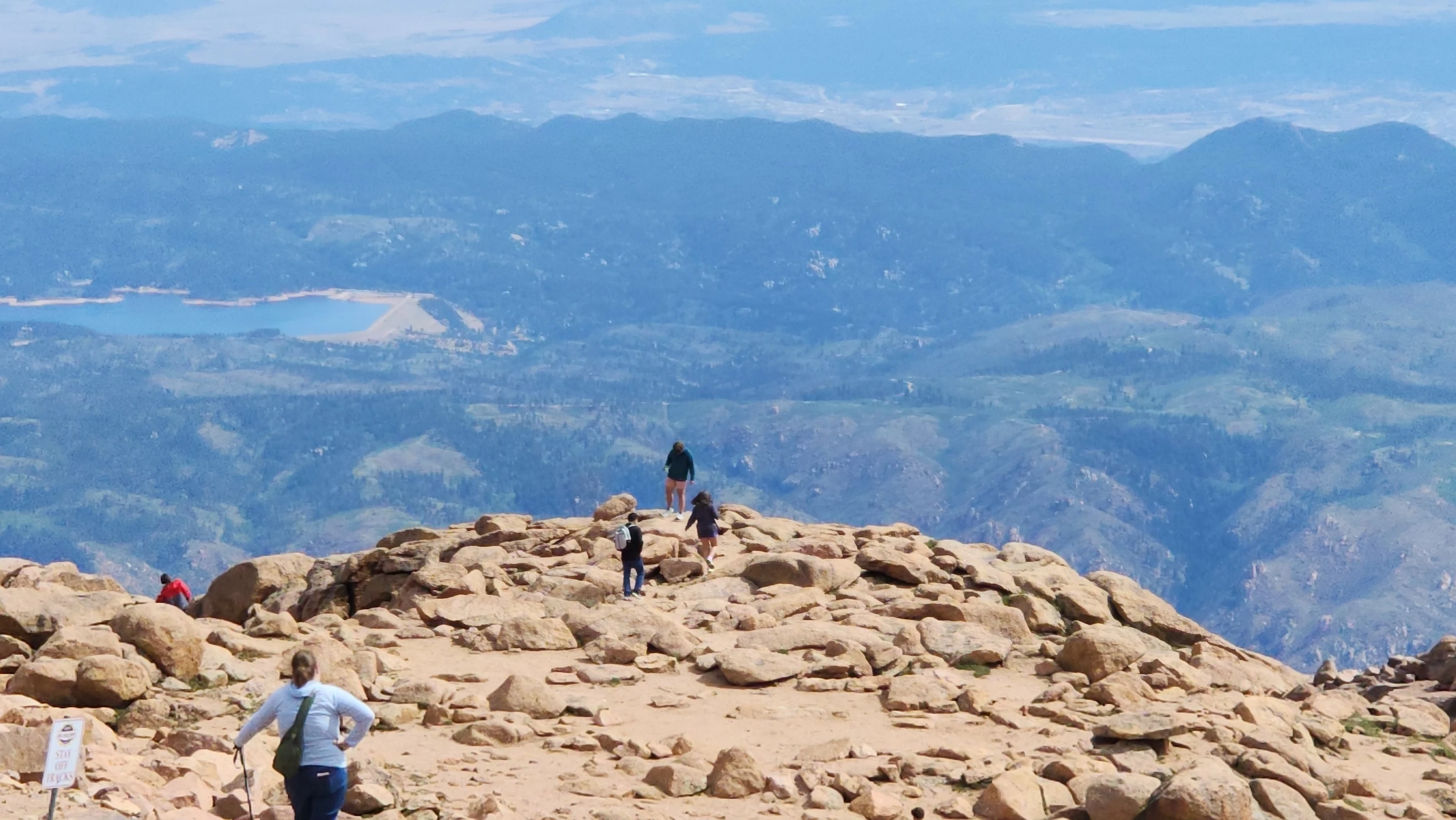
As we climbed into the thinner air above the tree line, the vegetation disappeared, and the landscape became rocky and exposed. With nothing hindering the view, we could see across the Continental Divide and the Rocky Mountains to the west.
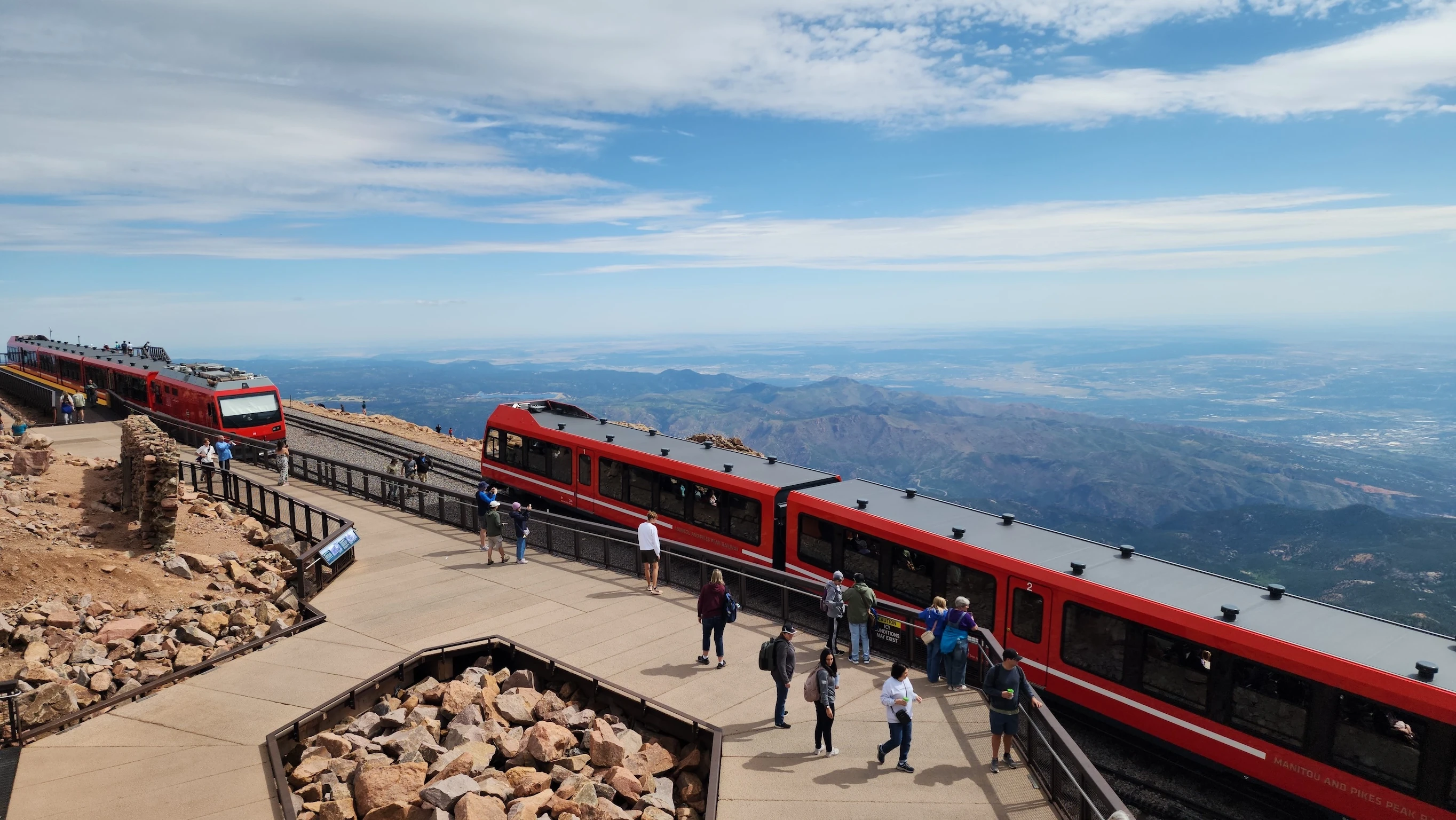
Passengers spend about 40 minutes at the summit before the train heads back down.
From the summit, you can see the Collegiate and Sangre de Cristo mountain ranges, and on a clear day, you may even spot Denver's skyline in the distance.
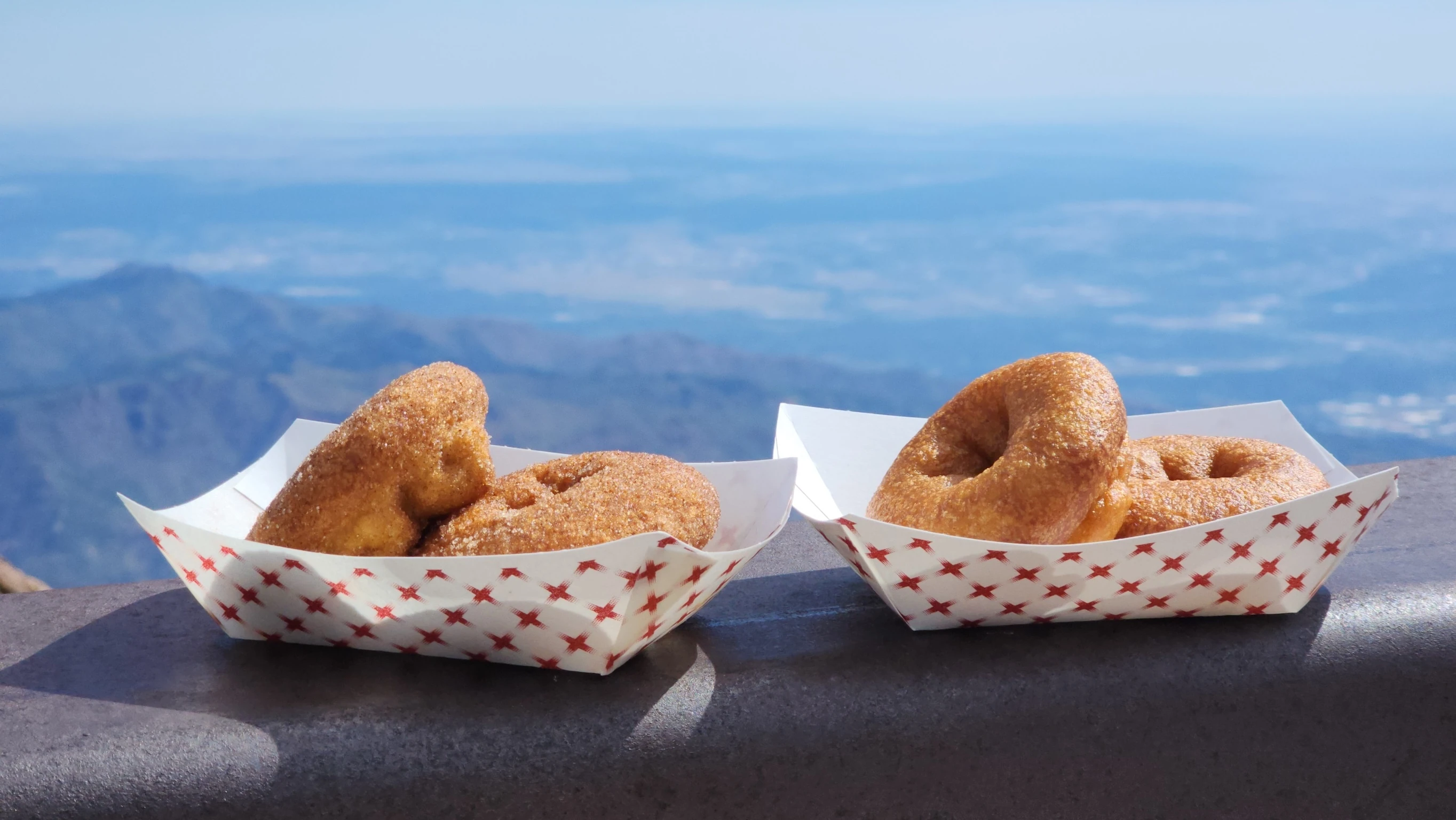
The Pikes Peak Summit Visitor Center also opened in 2021 and features exhibits on the mountain's history, geology, and climate. Most importantly, at least for our purposes, there are fresh-made donuts. We followed the aroma inside.
Donuts have been part of the Pikes Peak summit experience for over a century. The handwritten recipe reportedly dates to 1916, and it was specially formulated for the elevation.
The air pressure is much lower on top of Pikes Peak. Water boils at a lower temperature at high elevations, moisture evaporates faster, and dough is more challenging to work with. Baking and frying recipes need adjustments to compensate.
The Pikes Peak donuts were specifically developed for these conditions. In fact, the recipe is so closely tied to the altitude that the railway warns that the donuts don't hold up particularly well once they're taken down the mountain. They are ephemeral as an ice cream cone melting in the hot sun. A delicacy you can only enjoy in the moment.
The operation itself is serious business. When the new Summit Visitor Center was being built, a roughly 1,500-pound donut machine had to be installed before some doorways were framed because it was too large to move in later.
The building was literally constructed around the continued availability of donuts. I respect those priorities.
We bought two orders and carried them outside.
After a bite, it was evident that Pikes Peak donuts are not diminutive examples of pastry perfection. They were a little hard and dry, but we loved them anyway.
Maybe altitude had something to do with that, too: At 14,115 feet, the air contains far less available oxygen than at sea level, and even walking around can leave visitors a little woozy. However, we weren't interested in conducting a serious culinary evaluation.
We'd spent the previous hour climbing through forests and granite, passing bighorn sheep and marmots along the way. Now we were eating donuts made from a century-old recipe designed specifically for the strange cooking conditions of the place we were standing in. It was an experience we couldn’t have anywhere else.
At 14,115 feet, with the Rocky Mountains in front of us, they were about as close to perfection as you can get.
Discover Time Out original video