[category]
[title]
With major delays caused by the EU’s new entry/exit system, the ETIAS won’t be introduced this year as planned


At the beginning of this year we thought that, by December, every Brit would need a ‘euro-visa’ in order to travel anywhere in the EU. That’s no longer the case.
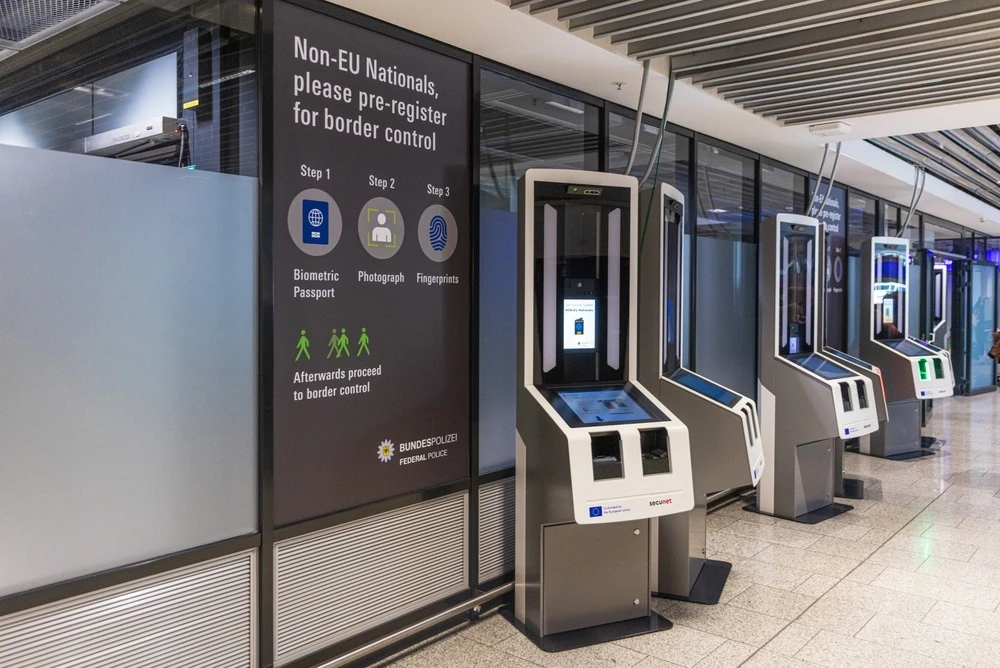
The European Union’s entry/exit system (EES) has been a decade in the making and was meant to launch back in 2022. Obviously, that didn’t happen and instead its rollout began in 2025. It requires travellers to provide biometric data, fingerprints and facial scans. ETIAS, which is essentially a visa waiver, is meant to accompany that system and was scheduled to come into effect in the ‘last quarter of 2026’.
But, like we said, that’s not happening. Last month, EU-Lisa (the agency in charge of implementing ETIAS) announced that the 2026 timeline would be unfeasible and experts predicted the launch would be pushed back to 2027. Now, the rollout has been delayed indefinitely and there is no longer a launch date advertised on the official website. Here’s everything we know about why the ETIAS has been postponed and when we might expect it.
ETIAS (sometimes referred to as a ‘euro-visa’) stands for the European Travel Information and Authorisation System.
It is the visa waiver that non-EU citizens will eventually need in order to enter the Schengen zone. When finally introduced, the pass will allow holders to stay in European countries for up to 90 days within any 180-day period (but if you stay in Cyprus, that’ll be calculated separately). It will last three years or until the traveller’s existing passport has expired.
The ETIAS can’t come into force until the EU’s entry/exit system is completely rolled out across all European airports. EES has already launched in several major airports across Europe but has been causing major queues and travel chaos.
The European Commission said in a statement to the Independent: ‘Obviously, as with any large-scale IT system, many factors come into play when deciding when to launch it. Once all conditions are in place, the Commission will set a date for the start of the system.’
Beats us. There is no longer a launch date on the official ETIAS website, but one report suggests that it’ll likely be 2027. We won’t hold our breath, though.
To be clear, ETIAS has not been cancelled – it will still be introduced eventually.
When they come into effect, it’ll cost €20 (about £17) to apply for an ETIAS. That fee is non-refundable, so you won’t get your money back if your application is refused.
You’ll need the ETIAS to enter any country that’s part of the Schengen Area, which is a group of 29 countries that have agreed to an open border. Here’s every nation that will require the visa waiver:
For the time being, it’s business as usual. All you need to travel to other countries in Europe is a valid passport.
ICYMI: Eurostar’s new competitor has ordered 19 high-speed trains to go from London to Paris.
Plus: A brand-new ferry route connecting England and France is launching next month.
Stay in the loop: sign up to our free Time Out UK newsletter for the latest UK news and the best stuff happening across the country.
Discover Time Out original video