

[category]
[title]
French technique, Japanese sensibility and Southeast Asian flavours come together in a thoughtful tasting menu set inside one of Singapore’s oldest mansions


I’ll admit when I first heard that a French-Japanese fine-dining restaurant was opening inside the 140-year-old House of Tan Yeok Nee, I was sceptical. With Teochew fine dining enjoying a quiet renaissance in China, it felt like a missed opportunity not to bring that to Singapore — especially given that this is the first time the historic mansion, the last of the ‘Four Grand Mansions’ of Teochew architecture, is finally opening its doors to the public.
But as it turns out, my cynicism lasts about as long as the first bite.
Rather than treading familiar French-Japanese ground, what chef Shusuke Kubota does at Loca Niru is far more thoughtful, and far more compelling. French technique and Japanese sensibility still form the foundation here, but the real spark comes from his reimagination of Southeast Asian flavours. The integration of local ingredients feels natural and genuinely new, resulting in one of the more exciting fine-dining meals we’ve had in Singapore this year.
The Japanese philosophy of Kotan (こたん), which values quiet simplicity, contemplation and refined subtlety, forms the heart of the restaurant. And you feel it everywhere from the moment you climb up the stairs to the main dining room. There's the preserved architecture with its original wooden trusses; the Teochew carvings and decorative mosaics made from porcelain bowls on the mansion’s roof, visible through the restaurant windows; and Japanese craft details that keep the space feeling distinctly wabi sabi.
With just 36 seats, the room encourages focus on the open kitchen, while still accommodating group tables and private dining rooms tucked elsewhere in the space.
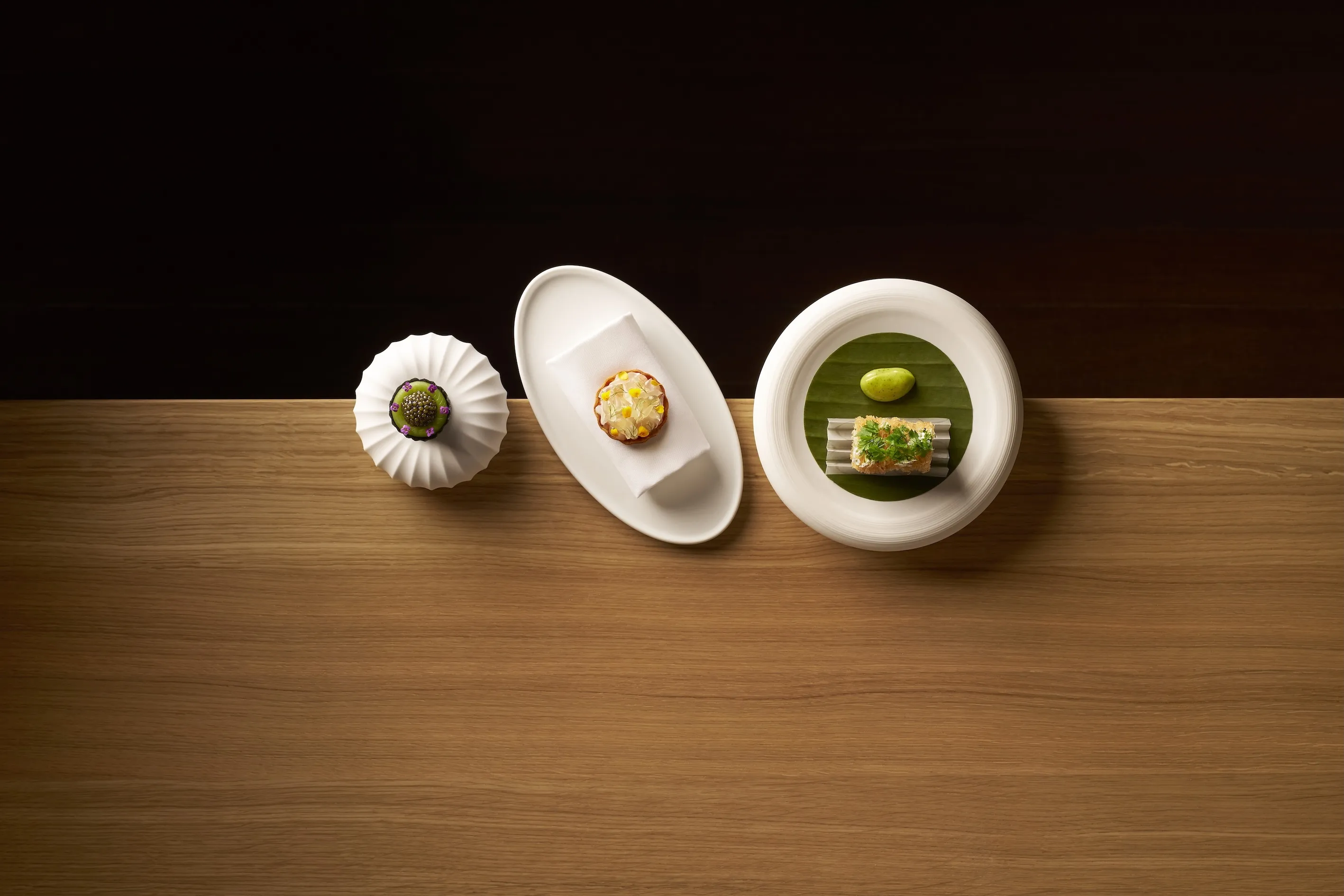
The eight-course tasting menu ($298) starts with the hassun, which immediately sets the tone. Hokkaido sweet prawn tartare is sharpened with tosazu jelly and Malaysian pomelo, followed by smoked sturgeon folded into a brandade-like filling and lifted with pickled celtuce and Oscietra caviar. Frog leg, which is commonly used in French cooking and also loved locally, is transformed into a springy roulade wrapped in crisp kadaif, with curry leaf aioli adding depth. Even at this early stage, the way Southeast Asian ingredients are woven into the bites signals that this is going to be a special meal.
Chutoro arrives next, its richness offset by an intense smoked tofu cream, pickled scallion and a roselle–calamansi dressing that nods to ponzu. Another standout is the braised abalone with vegetable-stock chawanmushi, crowned with seasonal mushrooms simmered in a deeply savoury mushroom consommé. If I could have ordered another bowl, I would.
The meal is largely faultless in execution, but I found the vegetable dumpling the weakest course. The presentation is beautiful, showcasing Malaysian vegetables sourced from Cameron Highlands farms, but the dumpling skin is a little too thick and the flavours don’t quite sing as loudly as the rest of the menu. Still, as a fully vegan dish and a celebration of regional produce, the intent is admirable.
The savoury high point is the isaki. Japanese grunt fish is pan-seared until the skin is shatteringly crisp while the flesh remains lush and unctuous, paired with a Nyonya-inspired beurre blanc that once earned Chef Shu a RED-35 competition accolade. A bun kneaded with buah keluak, purely so you can mop up every last drop of sauce.
The grilled wagyu beef, smoked with sugarcane and served with burnt onion jus, salted peppercorns and caramelised onions, is undeniably delicious. But wagyu with sweet onions is a combination we’ve seen many times before. While the quality of the A5 Wagyu is unquestionable — and, in true French fashion, the saucing is beautiful — it’s one of the few moments where I wished Chef Shu pushed the Southeast Asian influence even further, as he does elsewhere on the menu.
Desserts, made without a dedicated pastry chef, are a genuine surprise. Shine muscat grapes meet kedondong jelly and coconut mousse in a dish that’s aromatic and refreshing. The closing Malaysian chocolate dessert — layered with gula melaka sabayon, nutmeg and roselle — is also one of the most memorable bites of the night and a fitting end to the meal.
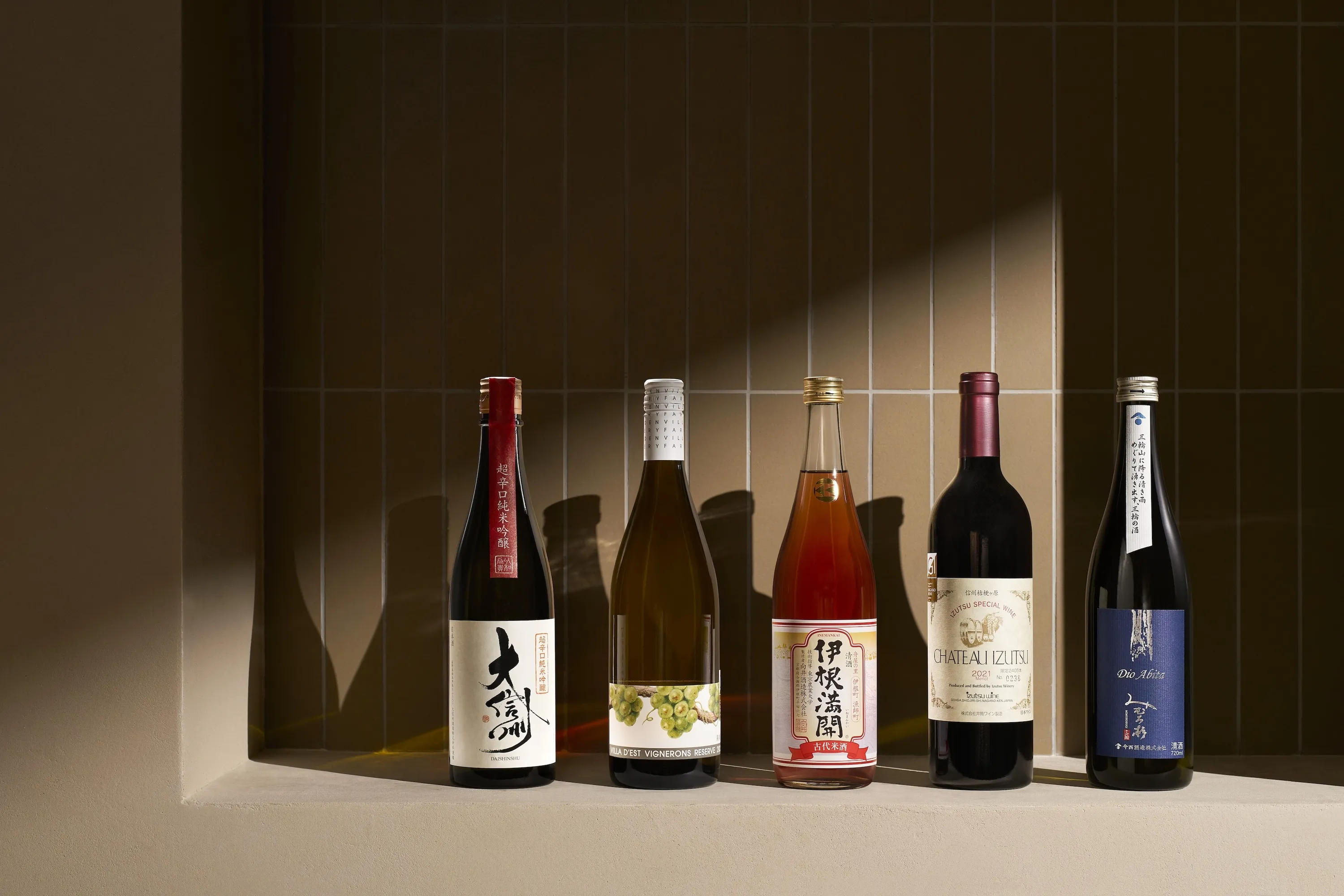
The beverage programme is thoughtfully curated, with the option of either a sake pairing ($148) or a wine pairing ($188). Highlights include a junmai ginjo from Nagano that mirrors the menu’s clean, mineral-driven approach. The pairings are designed to support, not overshadow, the food, with balance firmly at the centre.
For a new joiner, Loca Niru sits at the same price point as Singapore’s most ambitious fine-dining restaurants, inviting inevitable comparisons. What you’re paying for here is premium Japanese produce, meticulous technique and a level of presentation that’s clearly labour-intensive. As a first introduction, it’s a very promising start. The thoughtful integration of Southeast Asian flavours makes this one of the more intriguing new openings in the city and one worth watching closely.
Address: House of Tan Yeok Nee, 101 Penang Road #02-01
Opening hours: Tue–Sat 6pm–11pm (last seating 8pm). Closed Sun–Mon
Expect to pay: More than $300 a head with drinks
Discover Time Out original video