

[title]
New Yorkers have dreamed of a direct rail link between Brooklyn and Queens for decades. Now, at least, we know what waiting for it might look like.
The MTA has released new renderings of the Interborough Express, the proposed light-rail line that would run between the Brooklyn Army Terminal and Roosevelt Avenue in Queens. The sleek images show airy, mostly above-ground stations that appear worlds away from the dim platforms and mystery puddles of the century-old subway system.
One rendering shows a glassy station entrance beneath a wood-lined canopy, while another imagines New Utrecht Avenue with bright yellow platform supports, mosaic-style wall art and a streamlined blue train. A third shows an elevated station spanning a city street, complete with greenery, bike racks and another sweeping wooden roof.
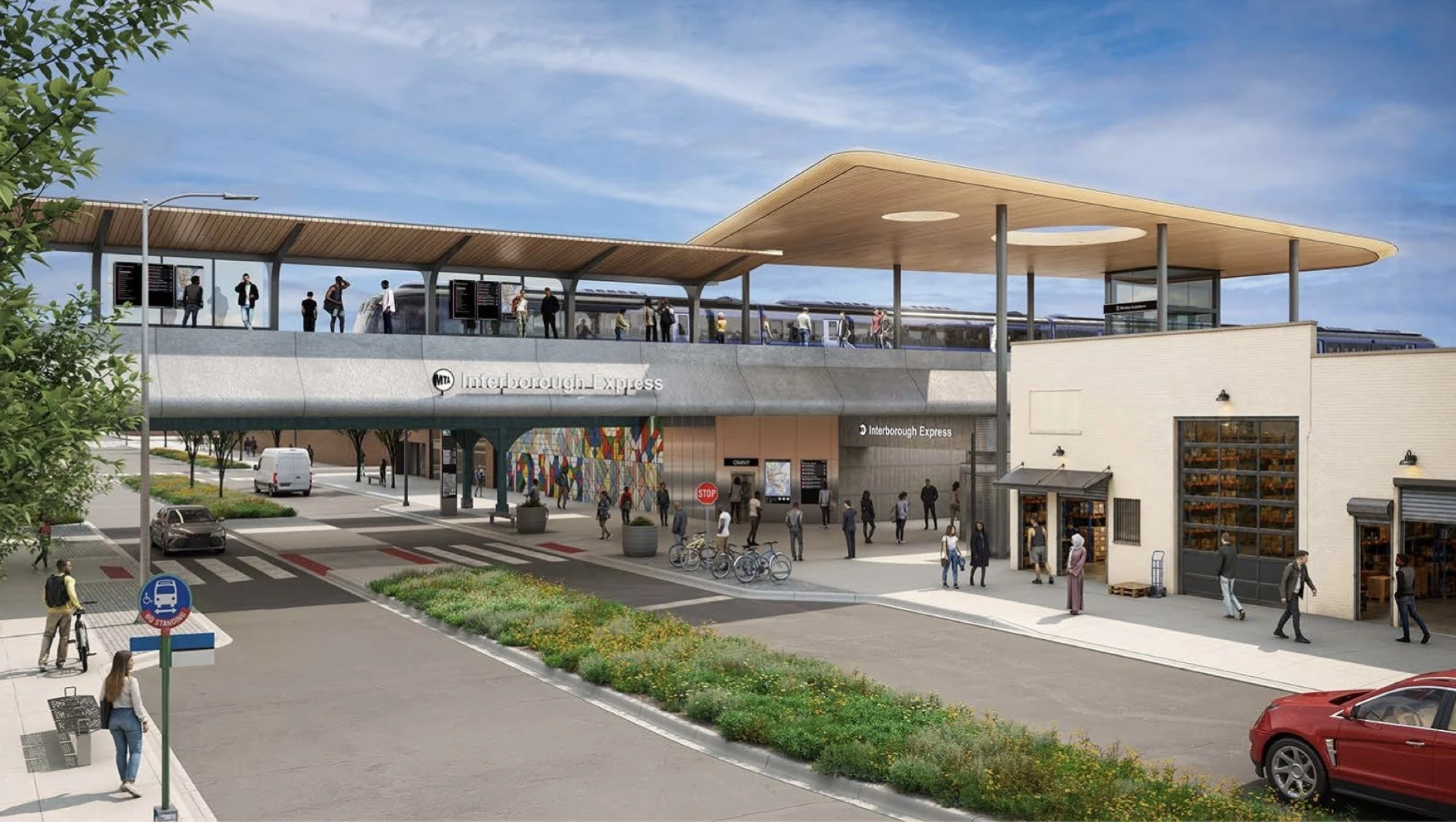
The visuals come as design and environmental work advances on the $5.5 billion project, which would repurpose an existing freight corridor and build 18 new stations. The trip from one end of the line to the other is expected to take 32 minutes, with connections to 17 subway lines, 51 bus routes and the Long Island Rail Road.
“This would be the first real, first end-to-end new transit line in New York City since 1937,” Governor Kathy Hochul told Gothamist. The IBX is projected to carry 160,000 riders each weekday and shorten trips for more than 900,000 New Yorkers who live near its route.
Accessibility is central to the designs. All 18 stations are expected to have level boarding, tactile floor tiles, wide fare gates, pass-through elevators with larger cabs, brighter lighting and both digital and audio announcements. The MTA is also upgrading four subway stations that will connect with the line: Broadway Junction, Junius Street/Livonia Avenue, Avenue I and Wilson Avenue.
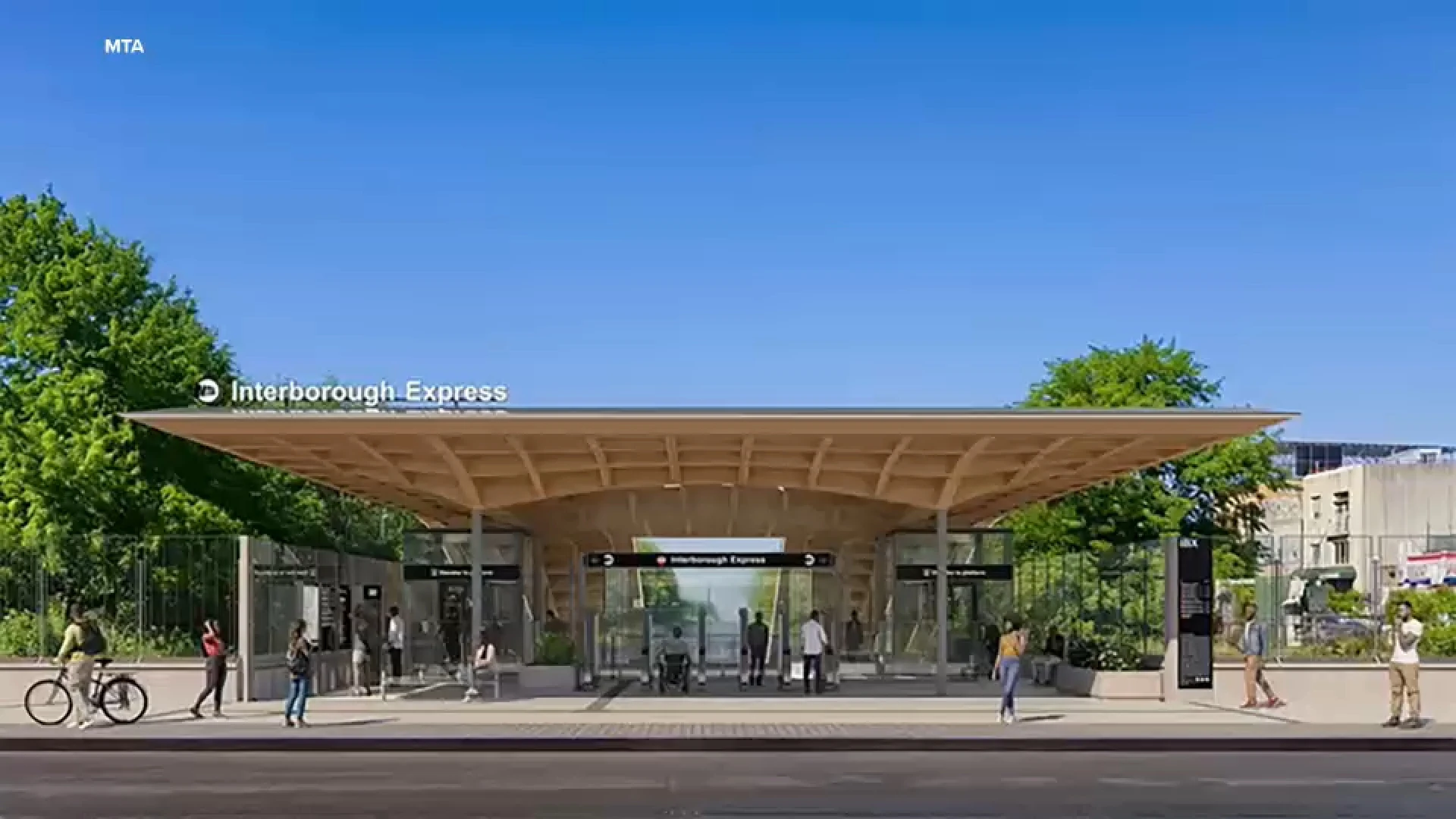
There is, naturally, a rather large catch: the IBX still has no firm opening date. Officials have previously placed its arrival sometime in the 2030s and only $2.75 billion (half of its estimated cost) has been approved through the MTA’s current capital plan.
The project’s Draft Environmental Impact Statement is expected during the final quarter of 2026, followed by public meetings where Brooklyn and Queens residents can weigh in. Construction remains years away, but after generations of outer-borough commuters being sent through Manhattan to reach the borough next door, even a rendering feels like progress.