[title]
Old Benjamin Button is getting born once again.
The Curious Case of Benjamin Button, the tale of a man who begins life at age 70 and matures backward into a child, first appeared as a fantastical 1922 short story by F. Scott Fitzgerald. More than 85 years later, it returned as a film directed by David Fincher and starring Brad Pitt. About a decade after that, a musical adaptation opened in a small London theater; in 2024, it moved to the West End, where it ran for a year and won the Olivier Award for Best New Musical.
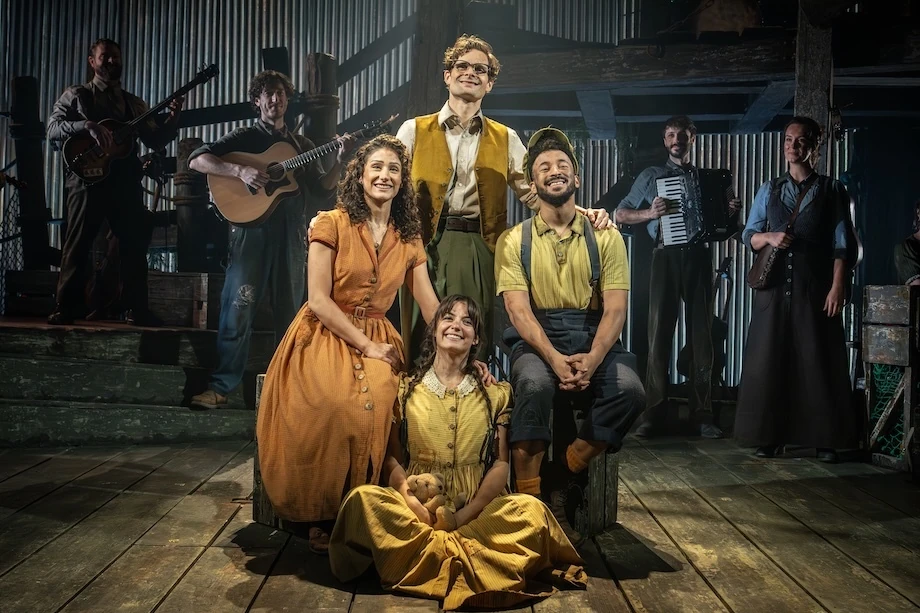
Jethro Compton and Darren Clark’s show is now in previews for its U.S. debut at the Public Theater on October 21, with a new cast led by Andrew Durand, who earned a Tony nomination for Dead Outlaw last year. The ten multitalented performers in the rest of the ensemble—including Kelsee Kimmel (Hell’s Kitchen) as Elowen, the love of Benjamin’s love—play multiple roles and multiple instruments, doubling as the show’s onstage band.
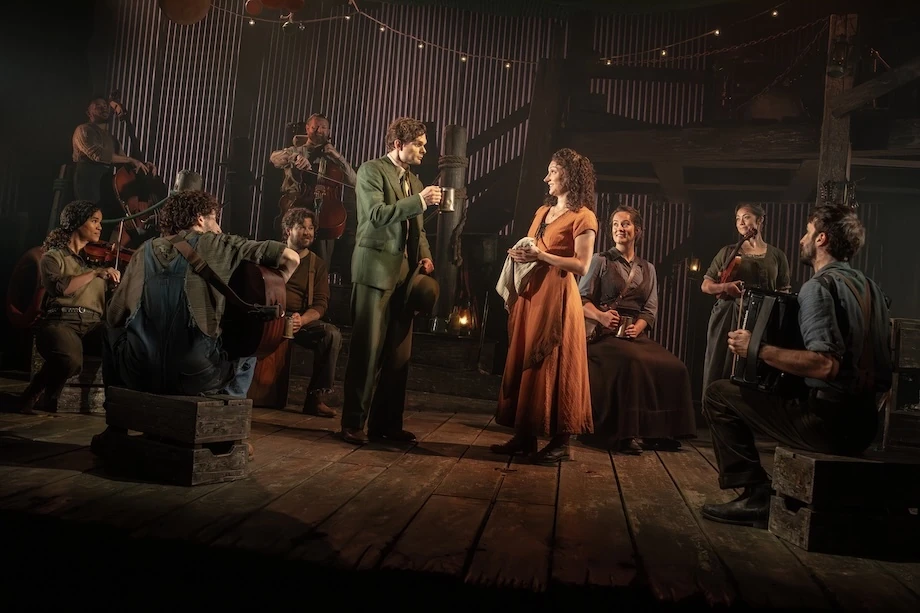
Unlike Fitzgerald’s version, which starts in 1960 Baltimore, the musical is set in 20th-century Cornwall, on the southwest tip of England. That has always been the intent: writer-director Compton went looking for a well-known story that he could relocate to his home county, and this one fit the brief. “I was interested in its fairytale concept, and Cornwall has such a history of folklore that the magic realism worked perfectly,” he says. The musical’s “very, very loose adaptation” of the story leaves most of Fitzgerald’s specifics behind as it explores what Compton calls “the idea that love can last a lifetime when two souls are connected, regardless of age or other obstacles.” Or as Benjamin says in the show: “Anythin's possible.”
“Jethro famously doesn’t like the story,” Durand says, and Compton admits to finding the original “quite bleak.” His collaborator Clark agrees. When Compton showed him an early draft whose second act was closer to Fitzgerald’s “much darker” vision, Clark dryly pointed out that they were working in a medium with different requirements: “This is a musical, and audiences don't want to just be depressed."
But some gloomy ideas do remain in the musical, albeit in lighter form; Benjamin's story is touched by death, and his transformation into an infant inevitably evokes aging with dementia. “This show deals with things we all encounter in our lives,” Durand says. “There have been tragedies and dementia in my family, and I’ve experienced moments of first love and of wanting to love someone but being unable to tell them.”
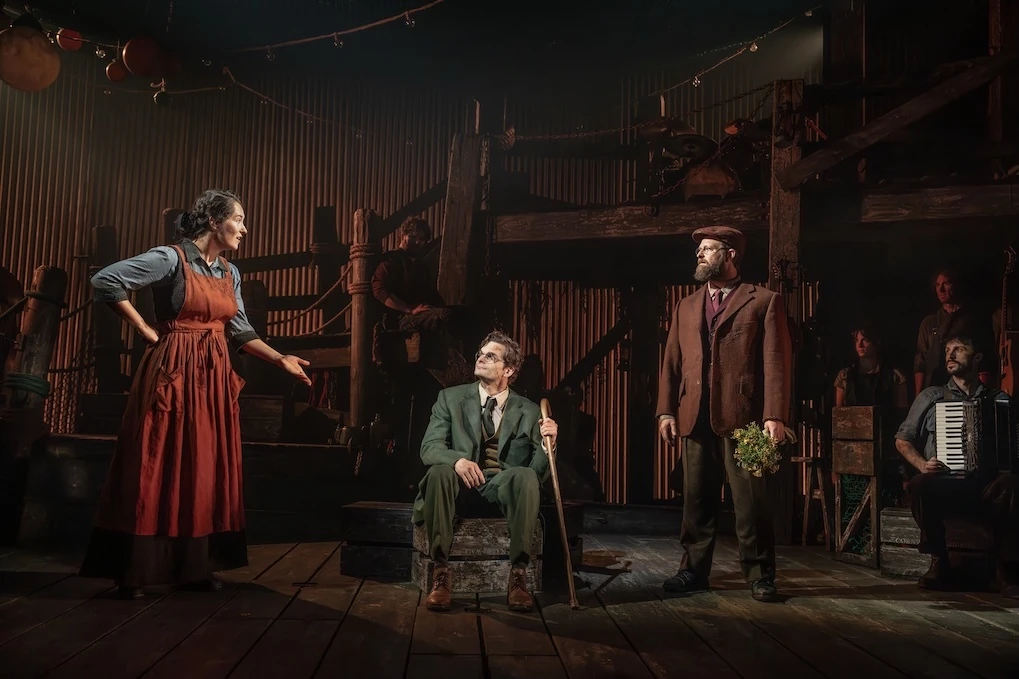
Compton has avoided rewatching the movie, but he remembers finding it too naturalistic, whereas the musical “embraces the fairytale and folklore, which allows us to focus on the truth that we're trying to access.” And it’s merely a fluke, he says, that this version of Benjamin Button, like the film, moves the title character’s birth to 1918. “I’ve always felt odd about writing about events during my lifetime,” he explains. Since he was born in 1988, he started there and worked 70 years backwards.
While their time lines may not overlap, Compton finds that he has a surprising amount in common with his character—and not just that they both love beer and get awkward on dates. The musical is about searching for a home when you don’t fit in, and he can relate. “I’ve felt that my entire life,” he says. When he wrote the first act, he was jumping between Cornwall and Vienna, feeling “very torn about where I belong.” And when he reworked the show after its 2019 production, he was literally homeless. “I spent a year sleeping on the floor of an office where I wasn't allowed to sleep,” he says. “I’d have to get up at six in the morning and go to this horrid pub that served breakfast to keep warm for a couple of hours till I could go back in. It was a really difficult year.”
“There’s a lot of me in there,” Compton says. “Once, in a production meeting, Darren even accidentally said ‘When Jethro walks upstage’ instead of ‘Benjamin.’” He has found a fellow spirit in Clark, whom he refers to as a brother. The composer was initially brought in just to write the music, which mixes folk and sea shanties with hints of other genres. (“That’s my bag,” Clark says.) But the two men proved so well-matched that they wound up co-writing the lyrics, too. “On the first day, we saw our sensibilities align,” Compton says. “It doesn't feel like there are two lyrical voices. Often we can't work out who wrote what.” Clark’s score has grown in texture as the cast grew from the original company of five, and Compton has come to rely on Clark, the faster worker of the two, for lyrical revisions as well. “I’ll have a detailed conversation with Jethro and then come up with 10 different versions to present to him,” Clark says, and they’ll often combine ideas from multiple drafts.
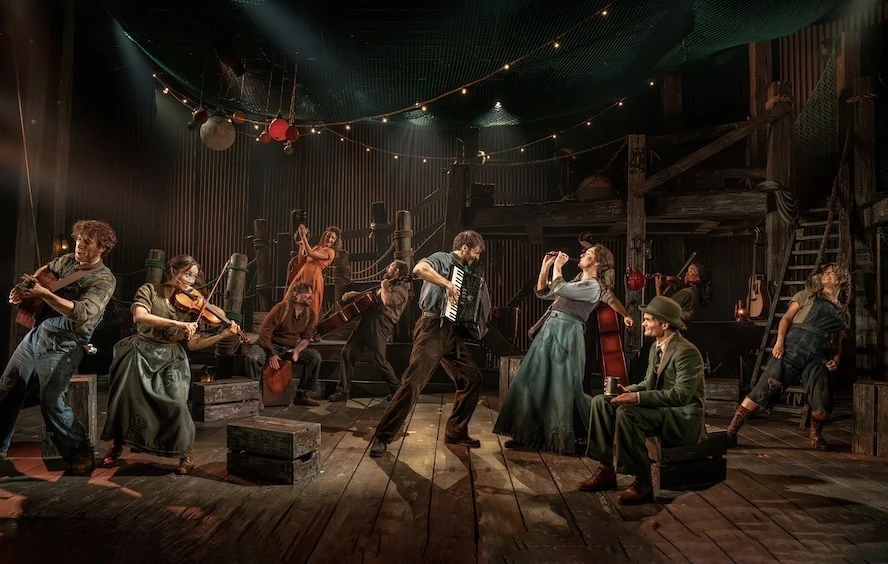
In readying the show for American audiences, the authors considered moving the story to New England, but quickly dismissed the idea. They did have to round up an American cast, though, and Compton says they feel exceedingly lucky to find Durand, who spent several years working with Cornwall’s Kneehigh Theater—which has influenced the musical’s storytelling style—and who walked into the audition with a Cornwall accent at the ready.
Once he got into rehearsals, Durand says, he was “in awe” of his castmates. “It’s been a while since I’ve felt like the least talented person in a room,” he adds. “But they were there figuring out how to move from A to B while switching instruments and doing a dance move and picking up a teacup.” That includes his co-star Kimmel, who plays guitar, keyboards and percussion in the show. “I can be in an emotional scene as Elowen and then five seconds later I rip my costume off, put on a guitar and jump into a dance number,” she says. “It’s a flabbergasting and charming challenge.” That seems very much in the spirit of the show. “I’m loving it,” she says. “You have to be ready for anything.”
The Curious Case of Benjamin Button plays at the Public Theater through December 6, 2026. You can buy tickets here.