[category]
[title]
Two of the Lucas Museum of Narrative Art’s most unique and transportive spaces don’t require a paid admission ticket.

You’ve probably already seen footage of the Star Wars props, the Van Gogh–inspired Pikachu and the striking spaceship-like architecture. But the Lucas Museum of Narrative Art’s most unique assets actually might be outside of the galleries—and, after it officially debuts on September 22, open to visitors for free, no museum ticket required.
George Lucas has referred to his eponymous institution as a temple to the people’s art, where a self-portrait of Frida Kahlo, an oil painting of dogs playing poker and a screen-used Batman suit make unexpected neighbors. But that for-the-people perspective also—especially—extends to the entrancing gardens surrounding the building, as well as the open-to-the-public library.
“I love that if you walk into our parks and gardens, you feel different,” says Lucas Museum CEO Tracey Bates. “You do feel like you’ve been transported somewhere else, which is the joy of storytelling—which is what the museum is all about.”
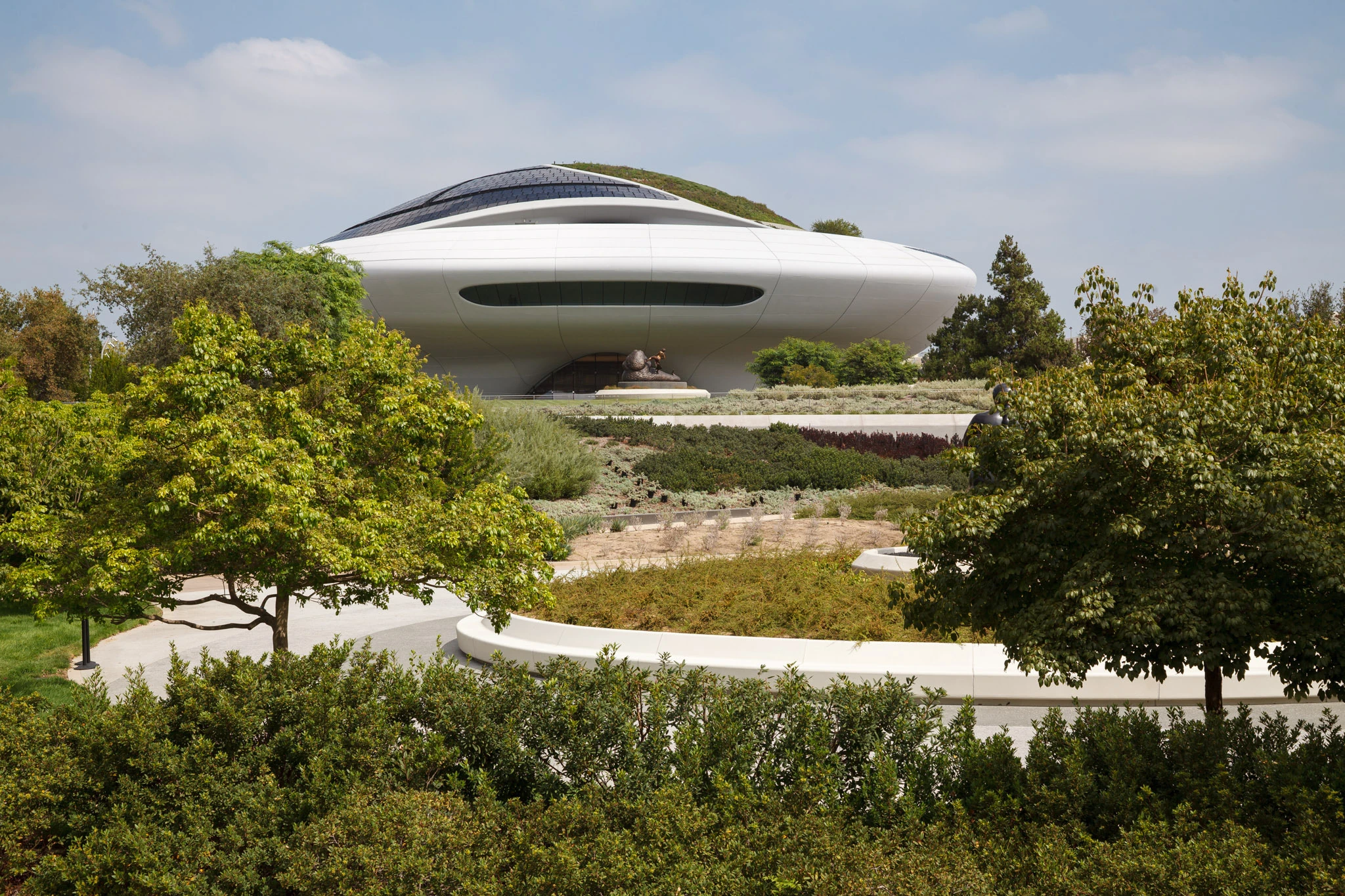
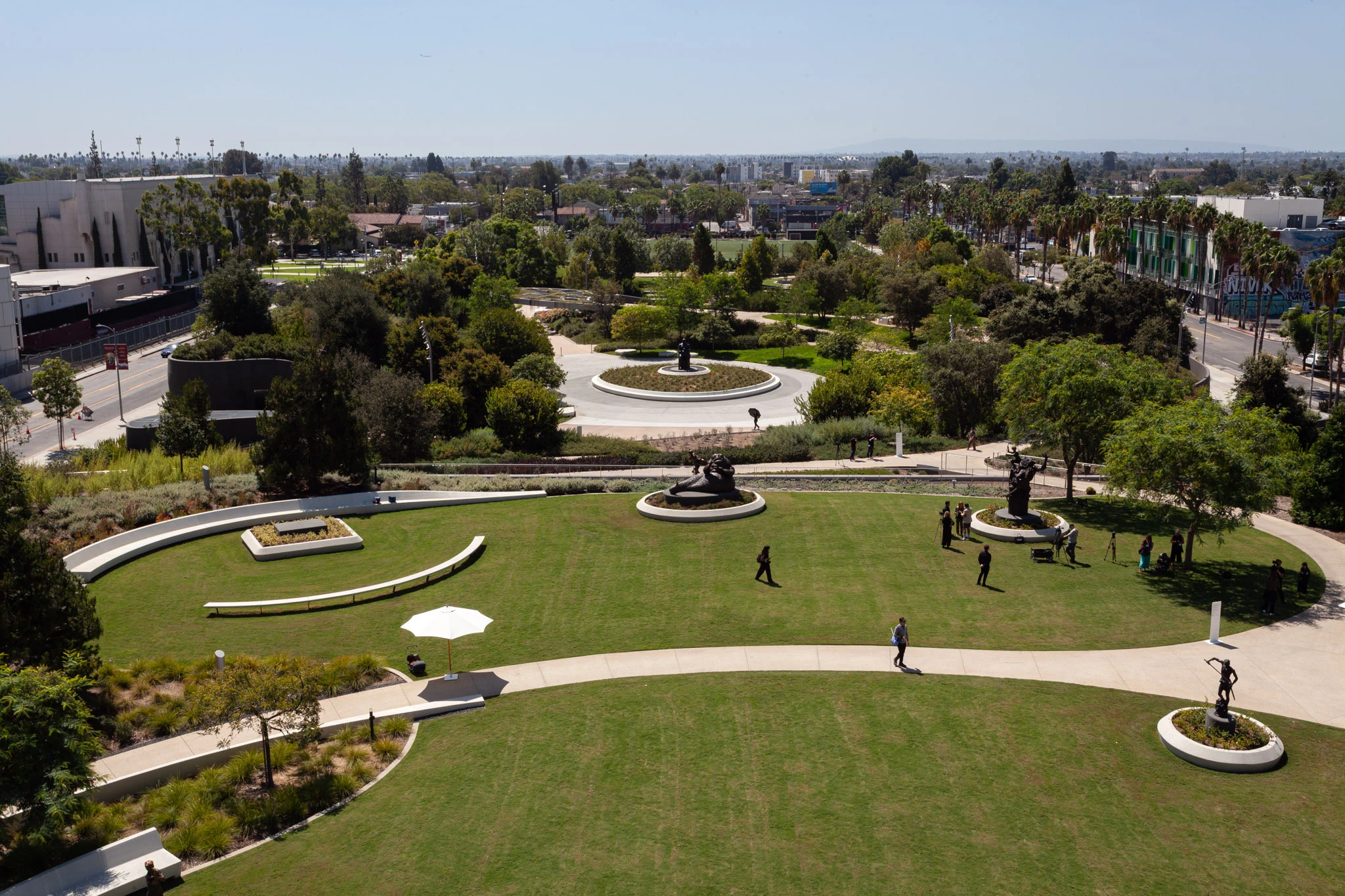
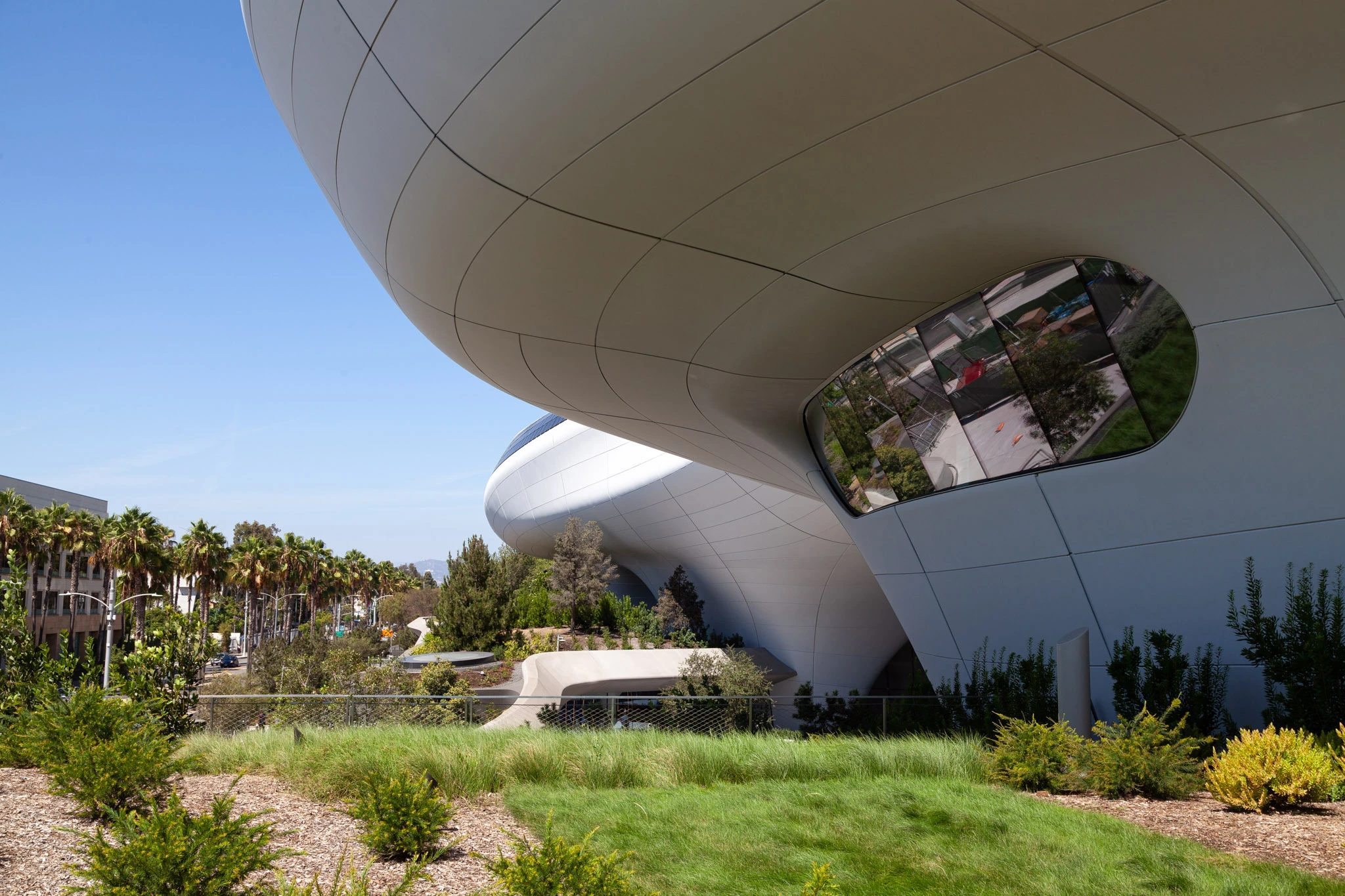
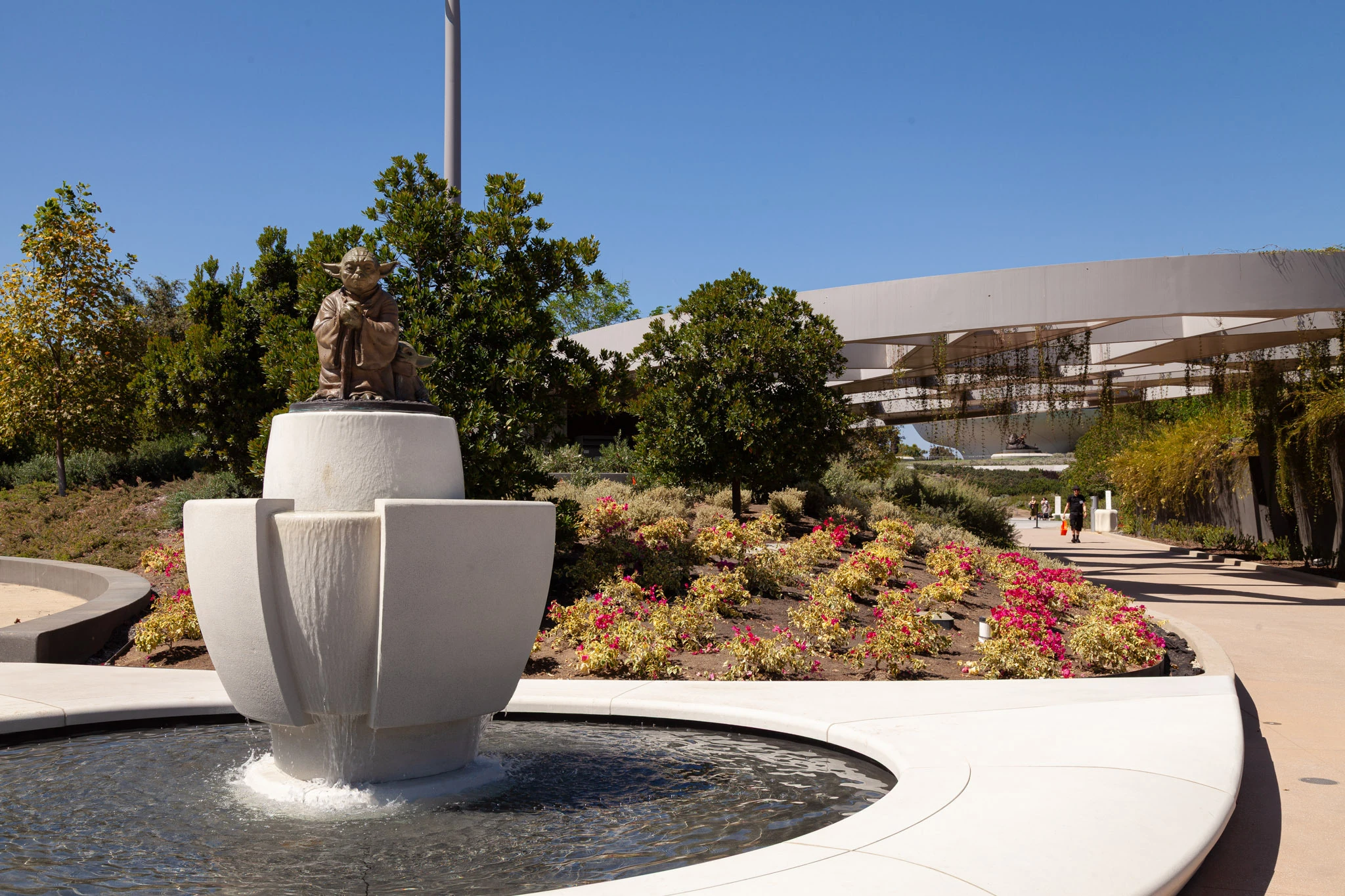
Whether you enter down the street from the Metro station on Vermont Avenue, across from the Natural History Museum and Coliseum at Bill Robertson Lane or into the middle of the Exposition Park–adjacent campus via the parking garage, you’ll find yourself in a mix of open grassy spaces and meandering walking paths. (Access here is completely separate from the museum galleries, which cost $25 for adults and nothing for kids 17 and under.) Dense clusters of native flora that’ve been maturing off-site for the past six years add much-needed greenery to what was once a parking lot. The cloud-shaped profile of the museum building, designed by Ma Yansong of MAD Architects, seems to float above the multi-tiered gardens.
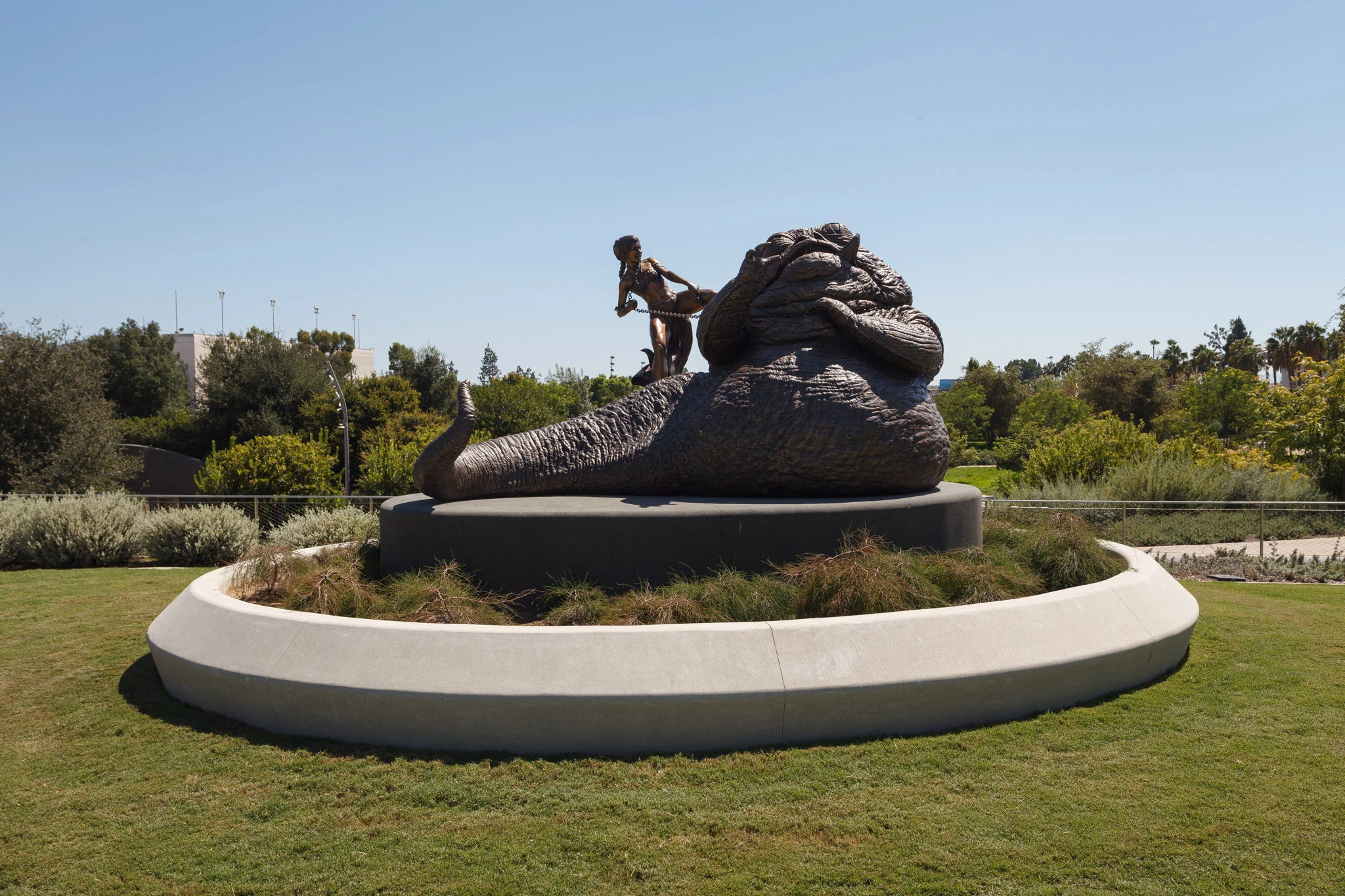
And then there’s the bronze statue of Jabba the Hutt—being strangled by a shackle-wielding Leia. And Padmé fighting off a pillar-climbing nexu à la Attack of the Clones. Or a fountain topped with Yoda and his post-Disney-acquisition counterpart, Grogu. Star Wars may only represent 7% of the museum’s displays, but it’s well represented in the gardens. It’s not the only art on display, though: You’ll also find, among other pieces, sculptures of Rosie the Riveter, King Kong stop-motion animator Willis O’Brien and Terracotta Daughters, artist Prune Nourry’s response to China’s famous Terracotta Army.
The free-to-visit park space, designed by Mia Lehrer and the team at Studio-MLA, also boasts a shallow amphitheater along its southern end. Though the full slate of programming is still to come, Bates expects that once a month on either Friday or Saturday (when the museum is open until 9pm), there’ll be a relatively large activation in the amphitheater (either for free or via accessibly priced tickets).
But you don’t need a formal event to unwind in the garden: Bates invites people to come on their way home from school, before an LAFC match, to sit down and sketch, or for a meal at a picnic table after a visit to the California Science Center. “We want it to become part of their daily lives almost,” she says. “I just want people to feel safe, relaxed, and I’d love to inspire creativity here because that’s what George would want.”
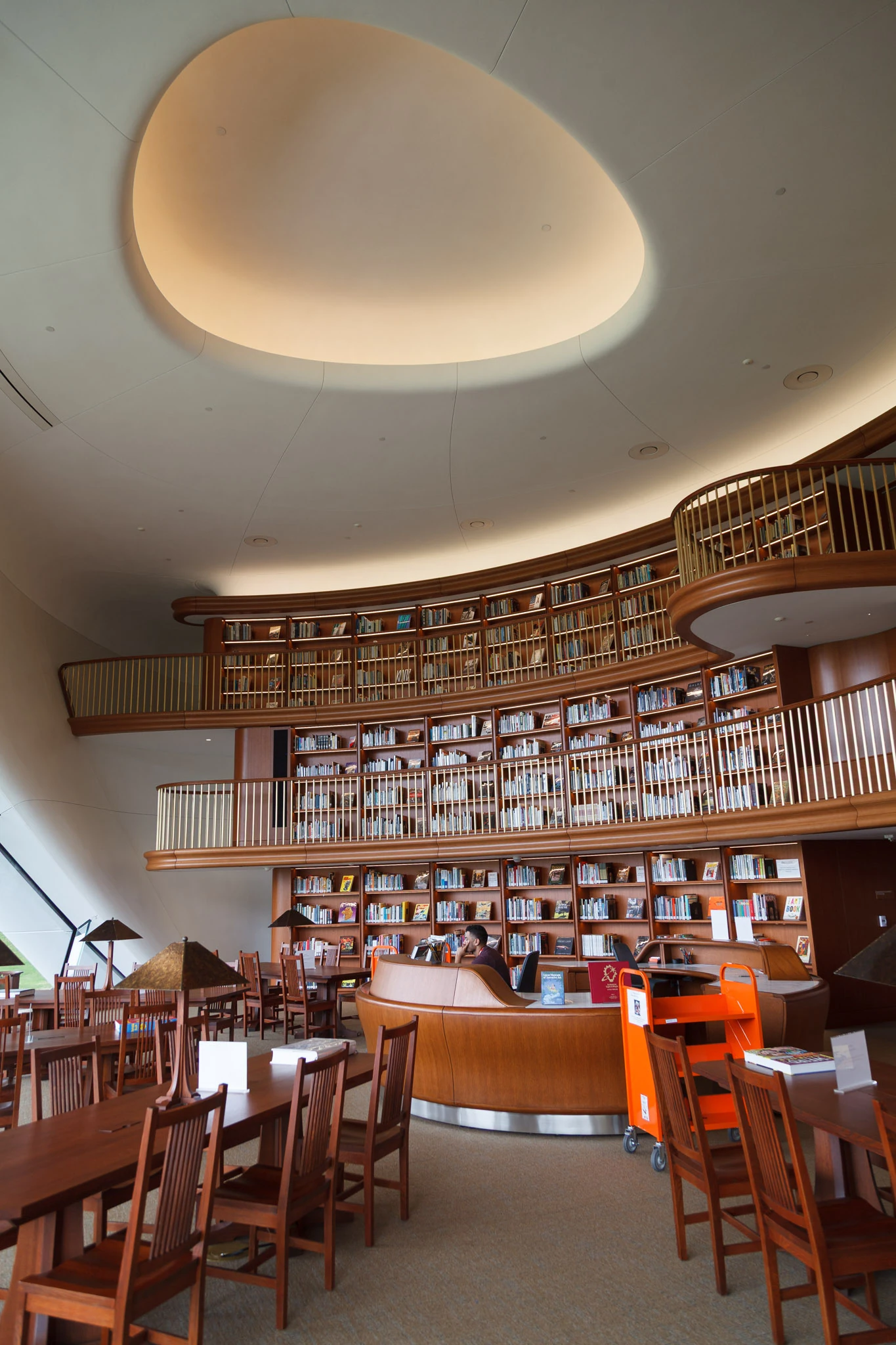
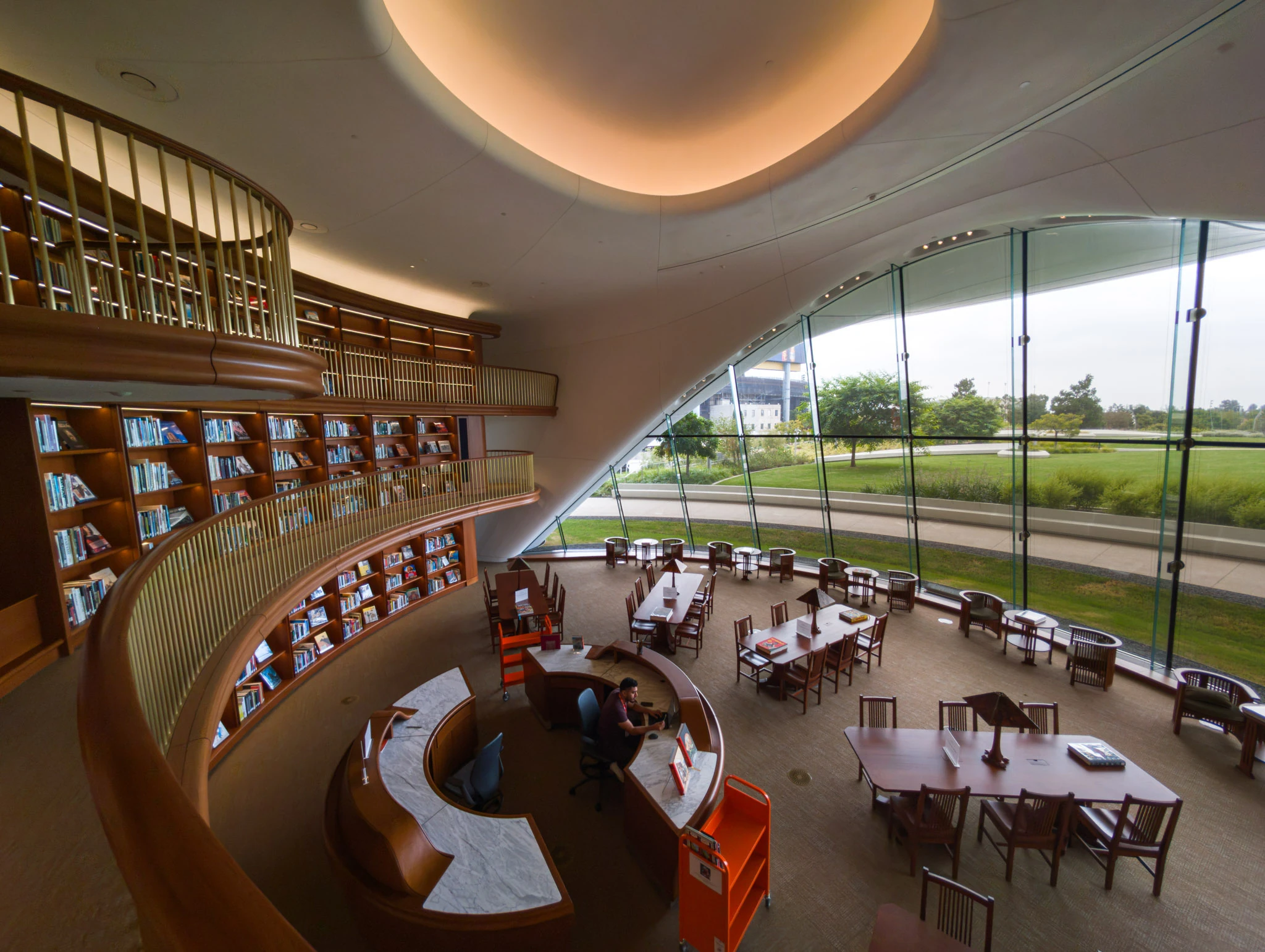
Speaking of creativity, the library here just might be the most imaginative space in the entire campus. Research libraries may typically give off a stuffy, studious air, but that’s certainly not the case at the Lucas Museum’s library, where light streams through the building’s spaceship-like shell and into a warm, Arts and Crafts–style sitting area with three floors of shelves carrying art books on everything from paleoart to Renaissance warfare to rock & roll posters.
It’s an all-encompassing collection that library director Joan Jocson-Singh hopes will draw in all walks of visitors—and the free admission is certainly a strong incentive too. “The fact that we’re open to the community and that you don’t need to pay for a museum ticket really, I think, dismantles the notion that libraries are for a specific type of person,” she says.
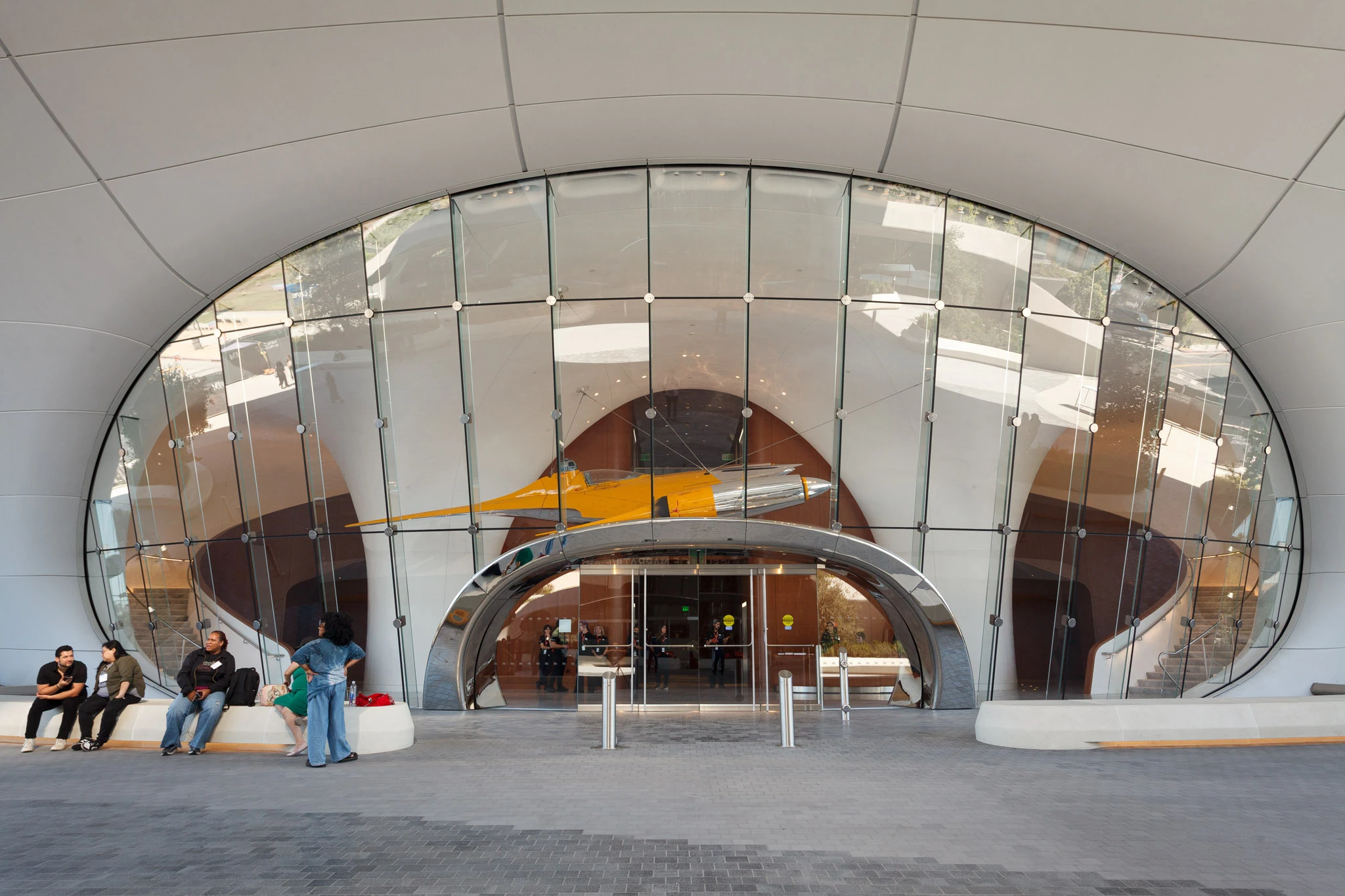
You’re welcome to peruse any of the books on the first-floor shelves and sit and linger as you read through them. (The library opens the same time as the museum and closes an hour earlier; just mention you’re headed there at the security checkpoint, look for the Naboo starfighter in the main plaza’s south building and then head up to the circulation desk.)
The collection started when the museum’s curators began researching some of the works that would ultimately go on display in the main galleries; these first-floor shelves mirror those themes, with books on comics, illustration and graphic arts, among other topics, and everything from Norman Rockwell to Dungeons & Dragons to the Separate Cinema Archive of early Black filmmaking.
Spot any books with their covers facing out and they’re likely some of Jocson-Singh’s favorites, whether that’s a primer on Hollywood portrait photographers, a collection of He-Man illustrations or a celebration of Babar. And over on the tables, you’ll spot what she refers to as, well, table books: heavy, oversized Taschen editions that are typically kept behind a shop counter, but here they’re out in the open with X-Men comics, Donald Duck drawings or the sci-fi and fantasy works of Frank Frazetta.
“Some of these books are out of print and rare,” Jocson-Singh says. “But it also gives you insight into our founders [George Lucas and Mellody Hobson]; you’re learning about the art that’s in the galleries that may not have titles that circulate widely, and it’s pretty unique because this museum is legitimizing and, what I like to say, academicizing art that hasn’t had a home before.”
Though the mezzanine and third-floor shelves are off limits to the public, they’re filled with fascinating collections for researchers: titles about military history, vehicles, the occult, adventuring and Americana gifted straight from Lucas and Hobson’s personal collection at Skywalker Ranch (the museum shelves are even styled as an homage to that private library), as well as volumes on major art movements like modernism, cubism and Canadian landscape art that have been donated by Steve Martin. (Some museum-loving Angelenos may remember that the comedy icon curated an exhibition on that latter topic at the Hammer Museum about a decade ago.)
All of the books in the library are non-circulating (so you can’t take them out of the room), and once you’re done reading, don’t bother trying to place them back on the shelves yourself: A bright orange book trolley with a photo of Yoda reminds you, “Reshelve, do not. Leave books here, you must!” You can expect to find a full catalog to browse on the museum’s website following the September 22 opening.
For Jocson-Singh, that day is likely to be a pretty monumental moment. “The first time we started doing previews and had people in the space… seeing children come in and light up,” she says. “To see adults come in here and look at books that they had such invested interest in that you typically don’t see in a museum library just felt so rewarding.”
Discover Time Out original video