[category]
[title]
We caught up with the director at the L.A. edition of his ‘Amores Perros’ exhibition, which resurrects lost reels into an analog installation.


You’re not supposed to stare at an eclipse, but nobody ever said anything about projectors. Because how often do you have the opportunity to gaze upon the guts of a decades-old analog projector? To watch two dozen photographs flicker past a lamp in the span of a second? To see a postage-stamp-sized still expand into a wall-sized moving image as it cuts through the darkness?
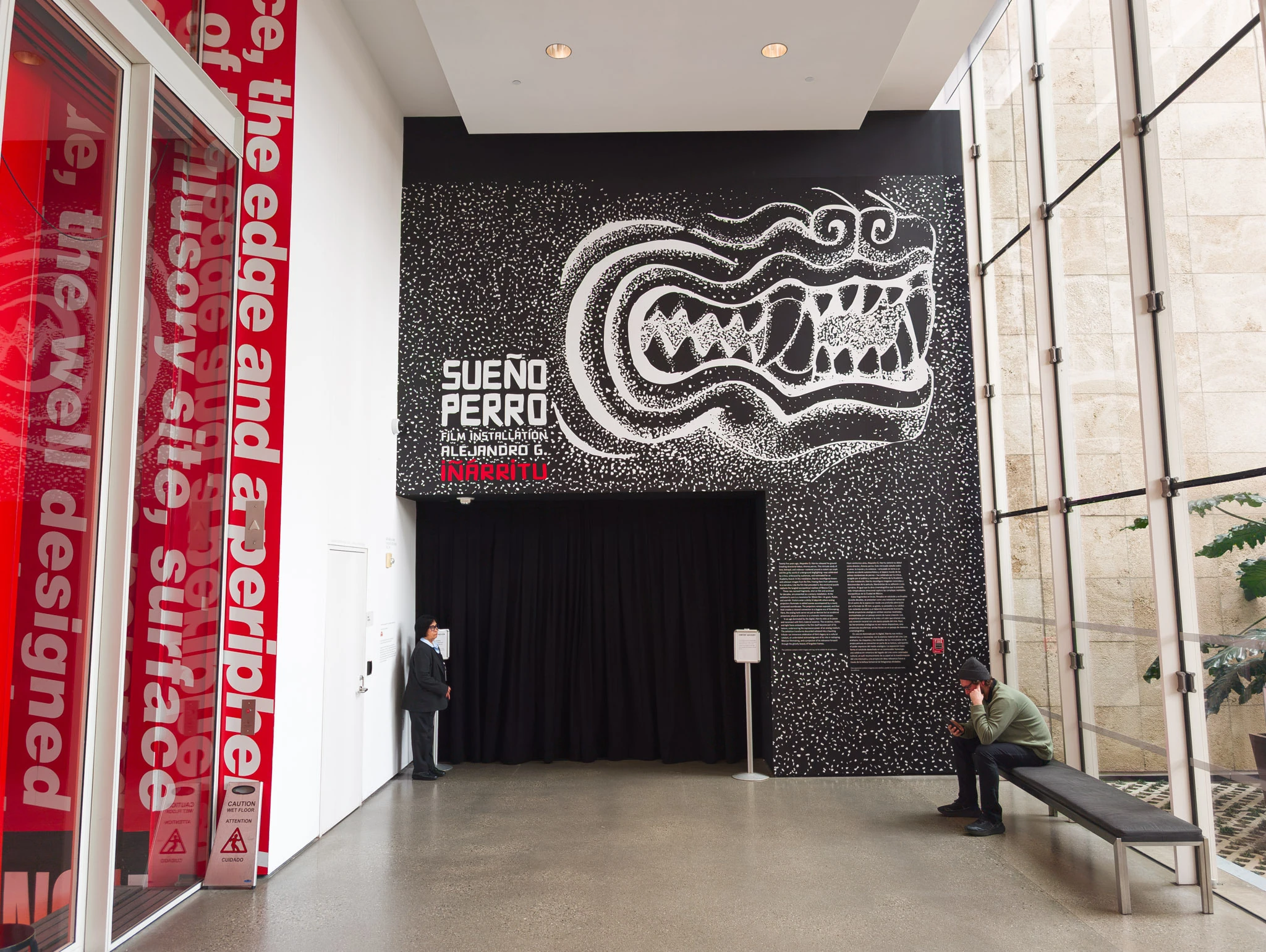
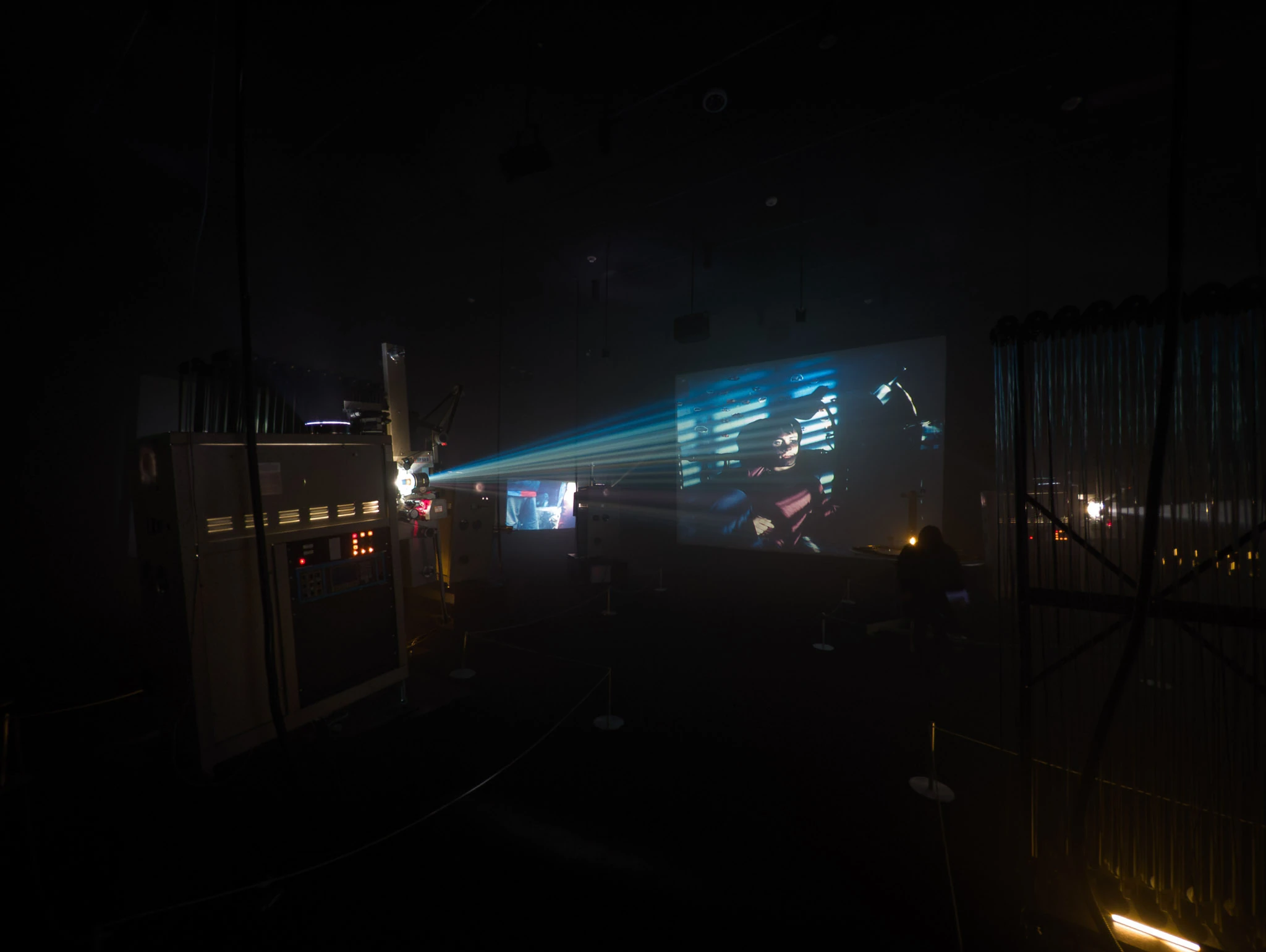
That sort of cinematic magic plays out six times over in director Alejandro González Iñárritu’s latest installation at LACMA. To craft “Sueño Perro,” which runs through July 26, the celebrated Mexican filmmaker pored over a nearly-forgotten trove of a million feet of film that he’d shot for his 2000 debut, Amores Perros. The raw footage was resurrected into roughly 15-minute reels that speed along columns of sprockets and twirl around looping platters to simultaneously play out across six film projectors in a hazy, near-dark gallery of the museum.
“This is material that was supposed to be but never was,” the Birdman and The Revenant director says during a late-February preview of the installation.
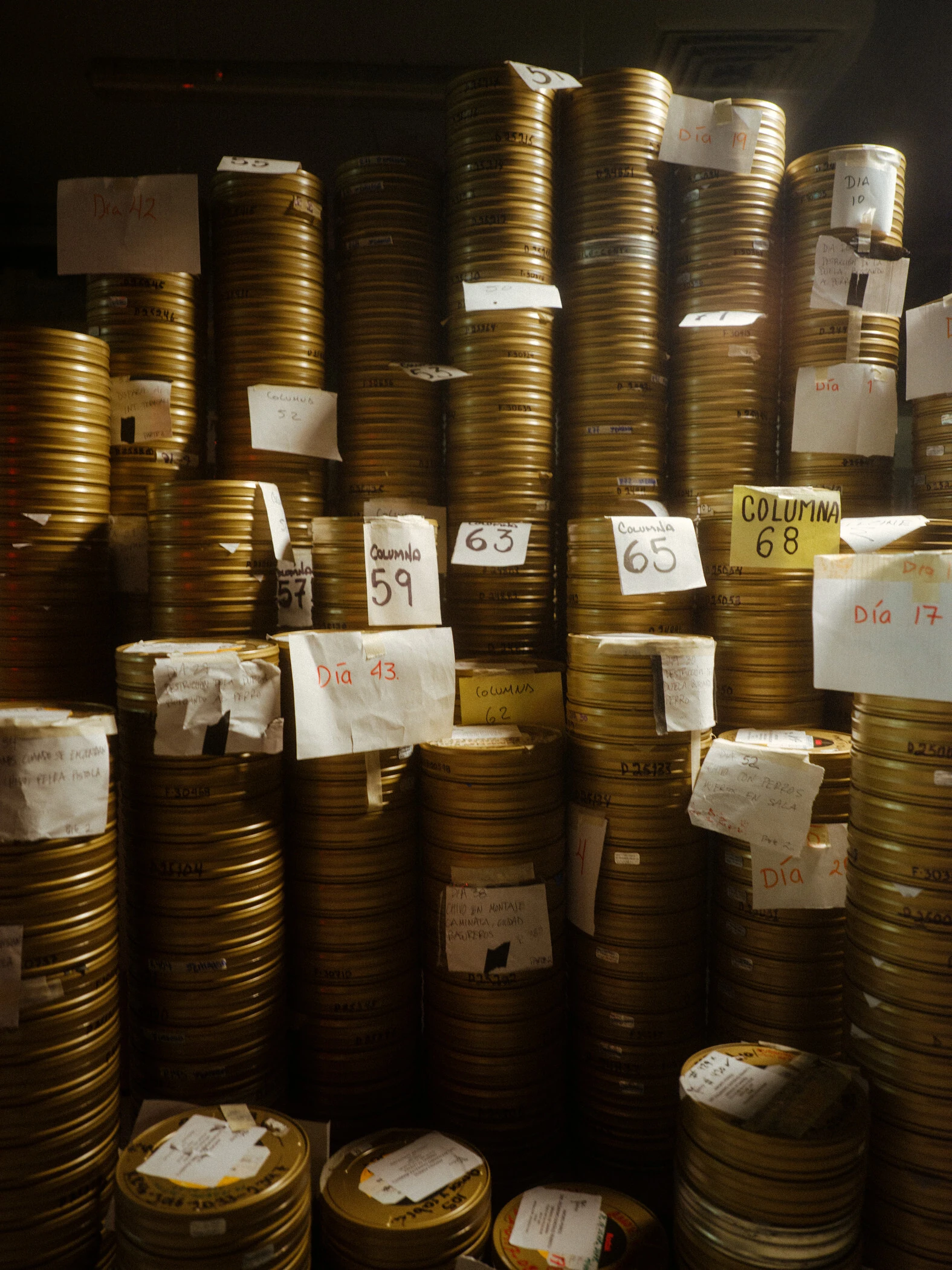
A cornerstone of contemporary Mexican cinema, crime drama Amores Perros follows three human (and canine) stories bound by a car crash in Mexico City. (It’s worth mentioning that dog fighting plays a pivotal role in the film, though at LACMA you’ll see some of the behind-the-scenes tricks that kept the production cruelty-free.) Though Iñárritu shot more than a million feet of film, the final cut, which clocks in at two hours and 34 minutes, occupies about 18,000 feet of celluloid—a mere rounding error in comparison.
Iñárritu assumed these miles of leftovers had been thrown away; after all, film is expensive to store. But by some miracle, producers Mónica Lozano and Tita Lombardo had left these cans upon cans of reels to the archives of the National Autonomous University of Mexico. And so 25 years later the director found himself revisiting this unexpected exhumation of his early career—like an old friend he’d never met before—a process he found both liberating and melancholic.
“I found some of these scenes very moving. To see [star] Gael [García Bernal] so young, and the city with the clothes and the cars [of that time] and with no service to any narrative, but just themselves,” he says. “Or seeing [the late] Emilio Echevarría… I said, ‘this is beautiful.’”
The largely narrative-free footage on display at LACMA looks much as it did straight out of the camera: Clapperboards open each scene, retakes roll right into each other and the open gate nature of the filmstock means that microphones and crew members are sometimes visible along the edges of the uncropped images. Splicing all of that old footage into something new felt like, in Iñárritu’s words, unfreezing the placenta of a 25-year-old baby, where “you take the DNA and put it together and it comes alive in a certain way.”
Then Iñárritu started tinkering with the technical, sculptural side of the installation while he was in London shooting Digger, his upcoming comedy with Tom Cruise. He procured three projectors from an exhibitor, staged some curtains and smoke, and started photographing the in-the-works setup. The first iterations of “Sueño Perro,” which debuted last fall in Milan and Mexico City, had a labyrinthian multi-room layout. But here in L.A., the six scenes converge in a single (sort of sweaty) gallery—the very same one where he screened the virtual reality short Carne y Arena in 2017. “I think this is the paranoid version, because everything attacks you at the same time,” Iñárritu says of the single-room LACMA layout. The loud, intense car crash scene rattles the air. Strips of celluloid whisk around every corner of the room and into three-decade-old commercial projectors, which occasionally glow orange as the scratched-up ends of the film feed through. Everything in here feels sculptural: the mechanical appreciation of the aging projectors, the painted white walls that serve as screens and the seemingly tangible, conical beams of light that pierce the darkness—in one scene where window blinds cast horizontal shadows across Gael García Bernal’s face, you can admire the alternating ribbons of light that emanate from the lens.
The result is a very nonlinear, all-at-once impression of the film, a reassembled puzzle of “fragments of those times in a very different city, a very different time, of a different me.”
“The other day, one person was telling me, I love it because it’s the way you remember films,” Iñárritu says. “And it’s true: When you remember a film, you don’t remember a film completely—you remember moments. And this is like snippets, like fragments of the memory. So this is how I feel when I remember a film.”
“Sueño Perro: A Film Installation by Alejandro G. Iñárritu” is on view in the first floor of LACMA’s BCAM building through July 26, 2026. Access is included in a general admission ticket, which costs $30 ($25 for L.A. County residents). Locals can also visit for free on weekdays after 3pm.
Discover Time Out original video