[category]
[title]
As part of our Heritage Month series, we caught up with Yudhika Sujanani to chat about Durban’s Indian food heritage and why keeping traditions alive means allowing them to evolve.


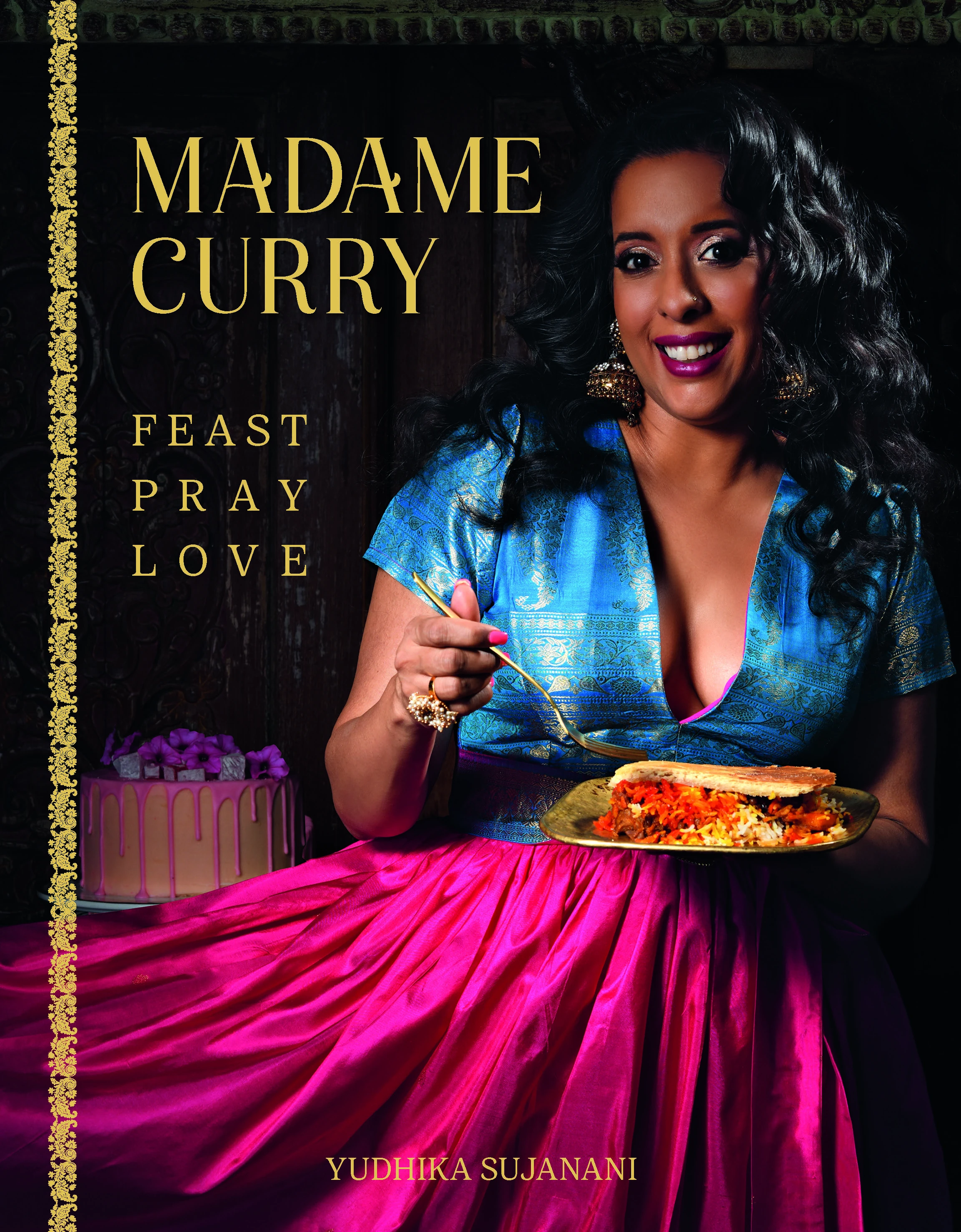
For Durban-born culinary personality Yudhika Sujanani, food has always been about more than what’s on the plate! Now based in Johannesburg, she runs Yudhika & Company, a deli and cooking school in Fourways, and has just launched another book, Madame Curry: Feast, Pray, Love.
The cookbook author, food entrepreneur, columnist, and television presenter recently returned to her hometown to host two sold-out cooking masterclasses on curries and baking.
She took some time out to chat to Time Out Durban about the evolution of Indian food in South Africa and why some of our most important culinary traditions are found in the simplest dishes.
READ: The KZN barista putting South African coffee on the global stage
Yudhika grew up in a South African Indian family where food was simply part of everyday life. She says it was only later that she realised those family meals were also a living record of history and migration. Her connection to Durban's food has only deepened through her travels.
“Wherever I have travelled in the world, I have always searched for an Indian restaurant, simply because I miss home food,” she says.
That search for familiar flavours has taken her to Indian restaurants in Sweden, Vietnam, Thailand, Italy and elsewhere. But while Indian food can be found across the globe, Durban's version remains uniquely its own.
“For me, it is deeply nostalgic. No matter how far I travel, those are the flavours that bring me home.”
READ: Durban Beyond the Beach|Part 1 of 4
According to Yudhika, you can’t understand Durban Indian food without understanding its history. Those who arrived brought memories of the food they had left behind.
“Durban’s culinary identity is inseparable from the history of indenture and migration in South Africa,” she says. “People arrived here carrying the memories of the food they had left behind, but they couldn’t simply recreate it. They had to cook with what was available, what they could grow, what they could afford, and what they encountered in the communities around them.”
Local ingredients became part of Indian kitchens. Yams found their way into curries, while samp and beans, familiar staples in isiZulu cooking, also became part of family meals. The cuisine absorbed influences from the isiZulu community, Cape Malay cooking and the many different Indian communities living in South Africa.
Scarcity also shaped the cuisine, she says.
“Ingredients we take for granted today simply weren’t available or affordable. There was no kasuri methi sitting on a supermarket shelf, nor the abundance of coconut, cream and rich nut pastes found in many regional Indian dishes. Durban Indian cooking was, by necessity, frugal.”
Yet those limitations produced remarkable creativity, she notes: “Tougher, bony cuts of mutton were slowly cooked and generously spiced until something humble became magnificent.”
For Yudhika, that is the genius of Durban food: “It was born out of migration, adaptation, necessity and ingenuity. It’s Indian in its ancestry, South African in its evolution, and completely Durban in the way it all came together.”
READ: Zulu Reed Dance 2026: What to know about uMkhosi woMhlanga in KZN
Some of Yudhika's strongest memories come from growing up on Barracuda Drive in Isipingo Beach in the early 1980s. Her recent Royal Feast Curry Masterclass drew on those memories, including the food she encountered in the Muslim homes around her.
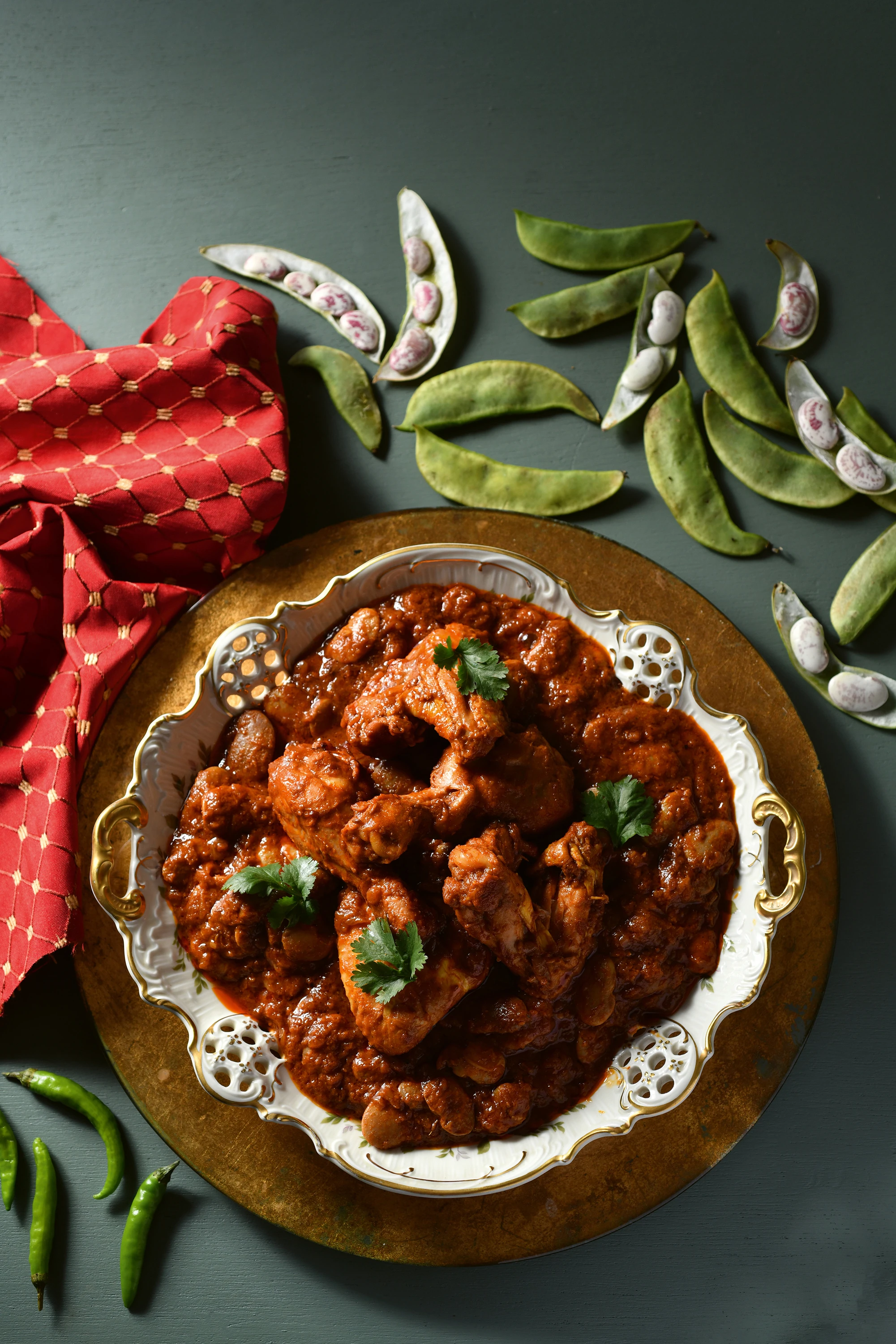
“The biryani was quite different from ours. It was paler, more aromatic and didn’t have the amount of red chilli powder we used at home, which made it wonderfully child-friendly,” she recalls. “The Shahi Masala Chicken is inspired by those rich, hearty, almost wedding-style curries, with a few tweaks of my own over the years.”
The community included people of different faiths, and celebrations were often shared. During the Muslim fasting month, enormous pots of haleem would be prepared at the local soccer ground.
“You simply arrived with your little takeaway container, and somebody filled it with steaming, meaty lentil broth. There was no charge. There was a heartbeat to those communities, and so much of it centred around food. People fed one another.”
READ: Durban ICC wins big in Africa as KZN tourism businesses take home World Travel Awards
For Yudhika, it isn't necessarily a particular spice, ingredient, or cooking technique that is most at risk of being lost over generations, but the experience of cooking itself.
“The kitchen wasn’t only the heart of the home; it was almost its lungs,” she explains. “It breathed into the rest of the house. Onions were frying, spices roasting, a pot simmering, bread cooking, and all those aromas seemed to inhale and exhale through the rooms.
“That is what I hope we don’t lose. Food has always been one of our love languages, and for some people that language is becoming foreign. Cooking is a way of telling our stories, sharing emotion and saying, without words, ‘I love you. I thought about you. I made this for you’.”
READ: Celebrate Spring and Heritage Month at Durban Botanic Gardens
“Convenience has played a much bigger role in the evolution of our food than we sometimes acknowledge, and I don’t necessarily think that’s a bad thing,” she says.
“Today you can buy tinned dhal, pre-ground lentils for vadas and ready-made mixes that remove some of the labour-intensive processes our mothers and grandmothers went through.
“If taking one laborious step out of a recipe means somebody still comes home from work and makes dhal or vadas for their family, then the tradition is still living.”
For Yudhika, retaining heritage doesn't mean completely emulating the past.
“That’s how food evolves. Ingredients become available, lifestyles change, and techniques adapt. Retaining our roots doesn’t mean insisting everything must be done exactly as it was 50 years ago. Heritage has to be practical enough to survive.”
READ: What's on in Durban this Heritage Month!
Yudhika's advice is refreshingly simple: don't start with the most complicated dish.
“Choose something simple that you remember eating at home. An egg curry, a potato curry with buttered white bread, even curried baked beans and sausages,” she suggests.
“Think about the food that appeared when unexpected visitors arrived, and somebody had to make a meal without fuss. That is often where the real soul of our food lies.”
And don't simply learn the recipe, she says; learn the technique.
“Some of my fondest food memories aren’t of elaborate meals at all. My gran could turn leftovers into something we would fight over! Perhaps that is what I would encourage people to learn this Heritage Month, although it doesn’t really have a recipe. Learn how to make something from what you have.”
She concludes by saying the inheritance left behind wasn’t just magnificent dishes from ancestors.
“They taught us how to stretch a handful of ingredients, how to waste nothing, how to feed unexpected guests, and how to turn yesterday's curry and a little rice into something a family might still remember 40 years later.
“There is heritage in the biryani pot, certainly. But there is just as much heritage in knowing what to do with what is left in it.”
📍 The best things to do in Durban
🍽 The best restaurants in Durban
🏨 The best hotels in Durban
🛏️ Where to stay in Durban
📢 Latest news from Durban
Follow Time Out Durban on Instagram, Facebook and TikTok! To get the coolest news, features, and things to do straight to your inbox, sign up for our newsletter.
Discover Time Out original video