[category]
[title]
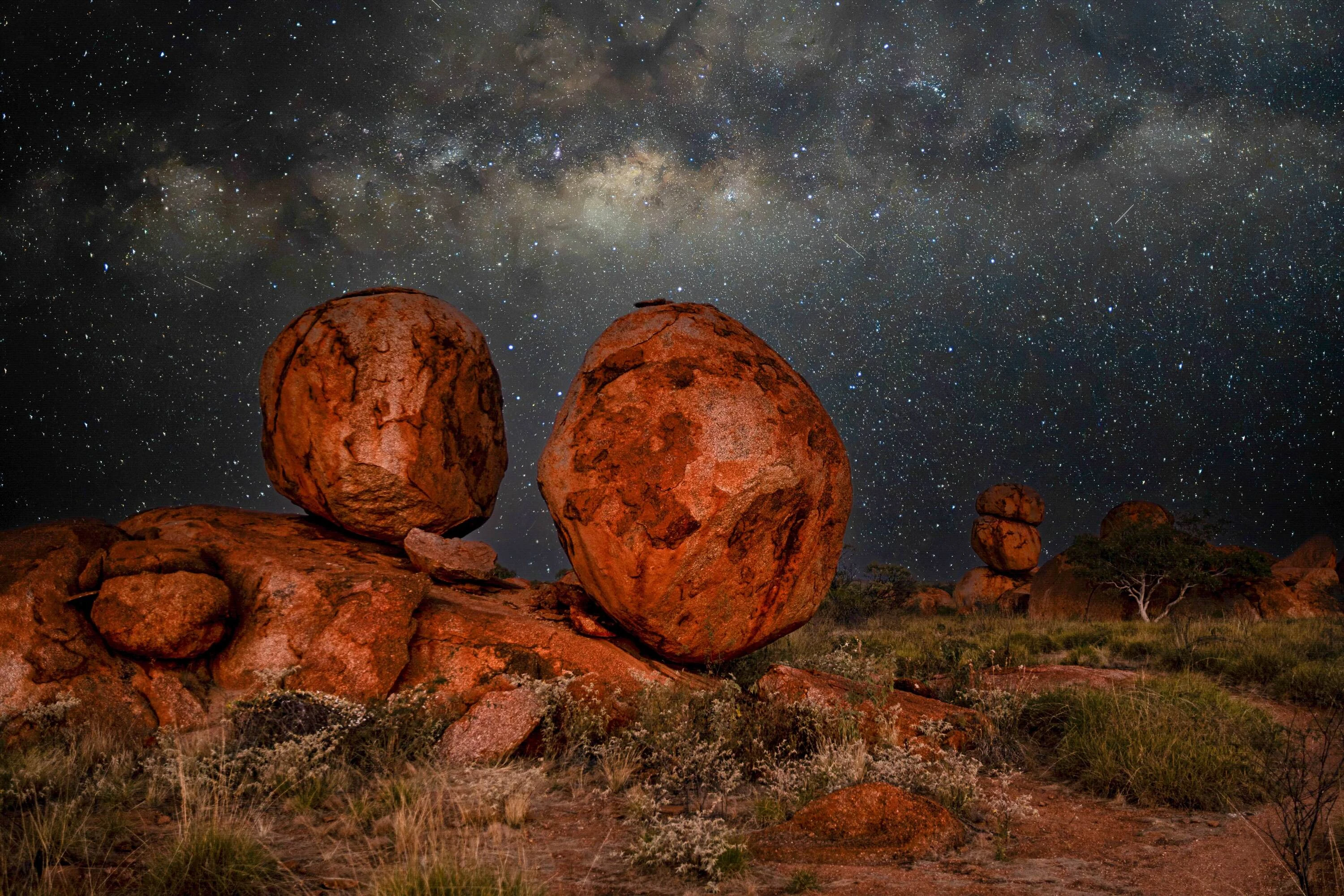
Karlu Karlu Conservation Reserve has joined a special global list of 270 certified Dark Sky Places


Astrotourism has skyrocketed in recent years, with travellers venturing deep into the outback for front-row seats to the world’s darkest, star-studded skies. If you’re keen to experience the magic for yourself, stop waiting for the stars to align and make tracks for Karlu Karlu (Devils Marbles) Conservation Reserve – the Northern Territory’s first International Dark Sky Sanctuary, and only the third in Australia
Located roughly 4.5 hours north of Alice Springs or ten hours from Darwin, Karlu Karlu – famously known as the Devils Marbles – is one of outback Australia’s most spectacular natural landmarks. The 1,800-hectare reserve is most famous for its ancient, rounded granite boulders that are scattered across an expansive valley beneath crystal-clear skies.
This month, Karlu Karlu was officially designated an International Dark Sky Sanctuary – joining 270 places worldwide recognised for their exceptional night skies and commitment to protecting them from light pollution. It marks only the third sanctuary in Australia to achieve this rare title, following Winton in outback Queensland and Carrickalinga on South Australia's Fleurieu Peninsula.
Karlu Karlu, which translates to ‘round boulders,’ has been a sacred site to the Kaytetye, Warumungu, Warlpiri and Alyawarra Traditional Owners for tens of thousands of years. Their stories, traditions and related Dreamings have shaped the landscape, making the sanctuary as culturally rich as it is visually breathtaking.
Keen to visit? The adventure is just as extraordinary as the destination. Karlu Karlu is a popular pitstop for road trippers doing the legendary 3,000-kilometre Explorers Way from Adelaide to Darwin. You can camp within the reserve beneath a sea of stars and even catch breathtaking views of the Milky Way galaxy you can’t get back home.
As part of the Dark Sky certification, the NT Parks and Wildlife team will add interactive signage throughout the reserve, offering information on night-sky viewing and the importance of preserving dark skies.
Philip Cowan, Senior Director of NT Parks and Wildlife Operations, said, “This designation will help protect the night sky at Karlu Karlu, ensuring any future development must adhere to strict lighting guidelines, ensuring preservation of the night sky for future generations.”
If you’re looking for the best time to visit, mark your calendars for the total solar eclipse on July 22, 2028. Karlu Karlu falls directly in the path of totality, offering up to five minutes of pure daytime darkness as the moon completely covers the sun.
Discover Time Out original video